


 Summary and next episodes
 Downloadable resources
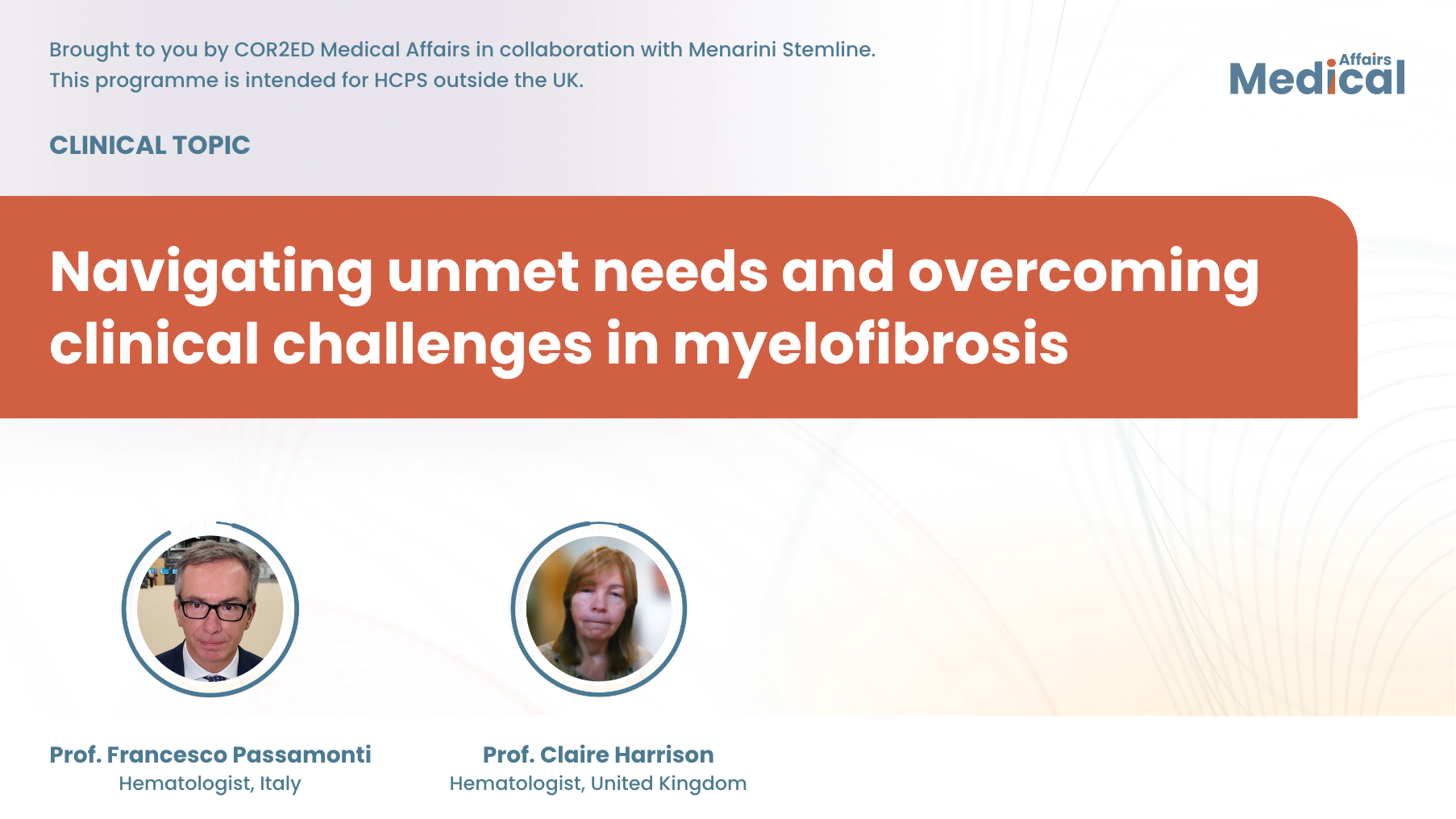
In this conference update video, Dr Hope Rugo and Prof. Matteo Lambertini share key insights from the 14th Asia-Pacific Breast Cancer Summit (APBCS) satellite symposium, chaired by Dr Mastura, and sponsored by Menarini Stemline.
The faculty discuss 2nd line+ treatment strategies and sequencing following ET + CDK4/6i in endocrine therapy–eligible patients with ER+/HER2 metastatic breast cancer (mBC).
Topics include:
- Overview of Pan-Asian and ESMO guidelines
- Intrinsic and acquired endocrine resistance after 1st line ET + CDK4/6i
- Role of biomarker-selected endocrine-based therapies and key clinical trial data
- Clinical relevance of ESR1 mutations and testing strategies
Clinical takeaways
- 2nd line treatment choices are defined by the eligibility to receive ET and are driven by biomarker status. For patients whose tumours retained endocrine-sensitivity, guidelines recommend exhausting sequential ET-based regimens
- RWE for elacestrant shows a consistent benefit, with ~8–11 months TTNT, aligning with the 8.6-month mPFS observed in patients with longer prior ET + CDK4/6i exposure in the EMERALD subgroup analysis
- In tumours retaining endocrine-sensitivity and coexisting PIK3CA and ESR1 mutations, elacestrant monotherapy can be a good option before PI3K/AKTi combination regimens, as data show similar efficacy with a manageable safety profile
- ESR1-mut testing should be repeated at each progression on ET if previously negative, as detection rates increase over time. Blood-based ctDNA is the preferred method, while archival primary tumour tissue should be avoided, as ESR1-mut typically develop during metastatic treatment
 Download Slides - PDF
 Duration
 Language(s)


 Downloadable
  8 MIN
8 MIN
 Oct 2026