





 Summary and next episodes
 Downloadable resources
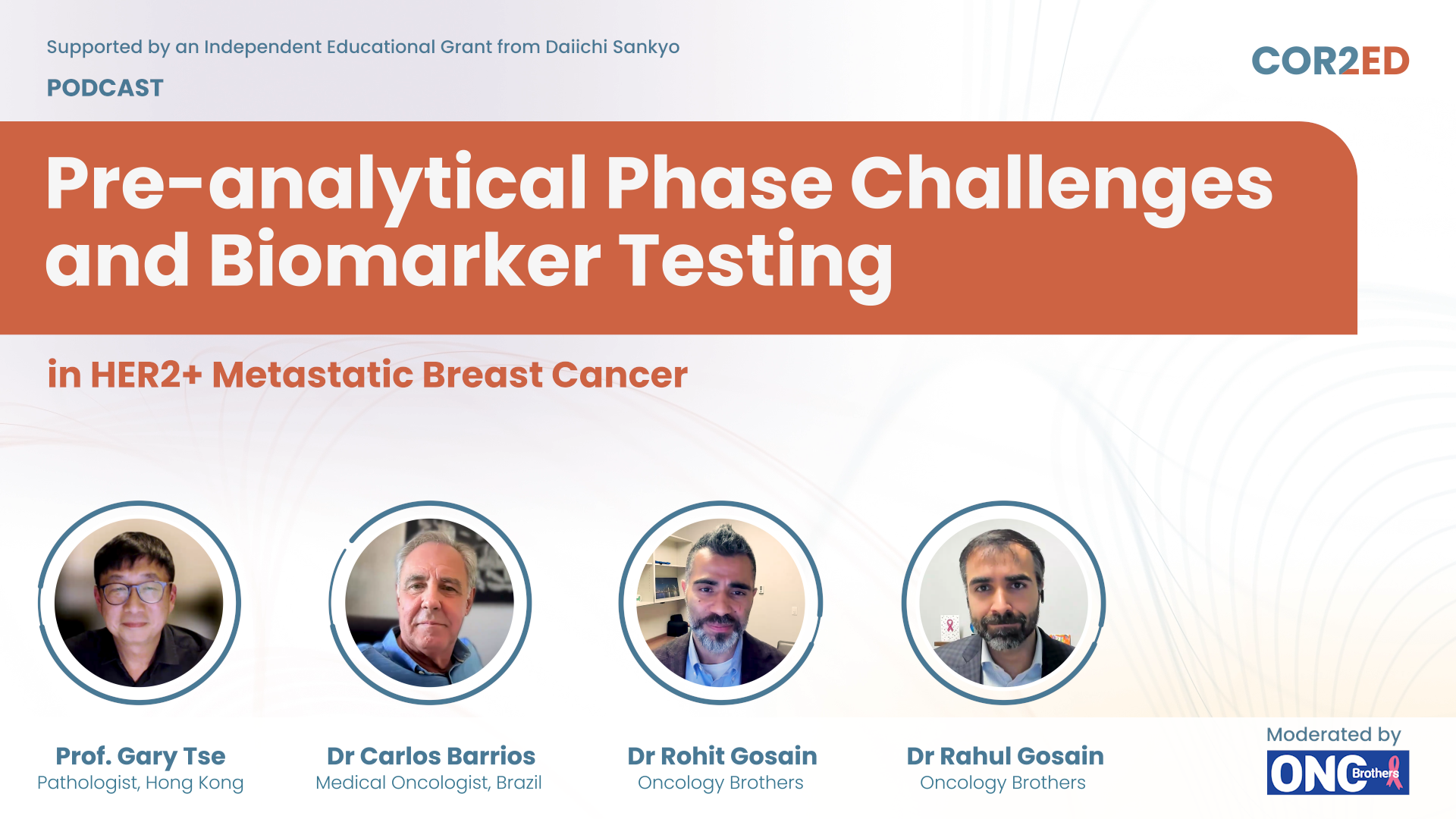
T-DXd is a key treatment option for patients with HER2-positive metastatic breast cancer (mBC), with its safety profile often described as “manageable.” However, clinicians and patients still need clear, practical guidance on how to manage treatment-related adverse events (TRAE) in everyday practice, from most frequent toxicities such as nausea, vomiting, and fatigue, to the rare but clinically critical risk of interstitial lung disease (ILD).
An international multidisciplinary panel has developed guidance-at-a-glance; step-by-step strategies to support effective management of T-DXd–related adverse events in HER2+ mBC.
The experts share:
- An overview of the current treatment landscape in HER2+ mBC
- Practical approaches to managing most frequent TRAE, including nausea, vomiting, and fatigue
- Best practices for recognising, monitoring and responding to ILD, including escalation pathways
- A dedicated one-page patient resource to support awareness and shared decision-making
Download the paper to move beyond describing toxicities as “manageable” and know how to apply practical strategies in routine care.
Clinical takeaways
- T-DXd is a highly emetogenic agent, warranting prophylaxis with a 3-drug regimen: a 5-HT3 RA, NK1 RA, and dexamethasone. A 4-drug regimen including olanzapine is recommended if prior 3-drug prophylaxis was inadequate or for patients at high-risk (e.g. younger age, history of CINV, anxiety, hyperemesis during pregnancy)
- As breakthrough nausea and vomiting may occur despite prophylaxis—within 5 days (acute) or between days 6–21 (delayed) post–T-DXd—upfront prescribing of olanzapine is recommended for potential acute or delayed symptoms, and ondansetron as an alternative for delayed nausea, to enable as-needed use
- Fatigue associated with T-DXd should be proactively managed through routine screening, assessment of reversible causes, patient education, exercise, supportive care, and dose adjustments when needed
- ILD is a potentially serious adverse event with T-DXd and should be addressed using the 5S approach: Screen regularly, scan early, synergise with the patient and MDT, suspend treatment if ILD is suspected, and initiate steroids promptly if ILD is suspected
 Download BluePrint - PDF
 Duration
 Language(s)










 Downloadable
  4 MIN
4 MIN
 Mar 2026