Dr Barbara Pistilli discusses the case of Marie T., a patient with pretreated HR+/HER2- (IHC 0) metastatic breast cancer (mBC) who has developed endocrine resistance.


The key question: What are the next therapeutic options for patients like Marie T.? 


In this case-based video, we follow Marie T.’s clinical journey—from diagnosis and treatment to managing adverse events (AEs).  


In this video, Dr Pistilli explores: 

  • The mechanism of action of antibody–drug conjugates (ADCs) 
  • Currently available ADCs for HR+/HER2- mBC
  • Strategies for managing ADC-associated AEs 


Clinical takeaways

  • Endocrine-resistant HR+/HER2− mBC remains a significant unmet need, and ADCs offer a more effective and tolerable later-line alternative to conventional chemotherapy
  • Dato-DXd demonstrated a statistically significant and clinically meaningful improvement in PFS versus chemotherapy, with continued benefits across secondary efficacy and PRO endpoints, despite OS not reaching statistical significance—potentially influenced by post-progression ADC use
  • Sacituzumab govitecan remains a valuable treatment option for heavily pretreated patients with HR+/HER2− breast cancer, demonstrating clinically meaningful improvements in PFS, OS, and PRO, with a manageable safety profile when supported by appropriate care.
  • To support treatment adherence and maintain QoL with ADCs, effective management of AEs is crucial—whether through prophylaxis, supportive medications, interventions, and/or dose modifications.
  • In the absence of predictive biomarkers, selection of ADCs for HR+/HER2− (IHC0) mBC should be guided by prior treatments, clinical characteristics, toxicity profiles, and patient preferences.
  • Recognise the efficacy and safety profiles of TROP2-directed ADCs for patients with advanced or metastatic HR+/HER2- BC, and their place in the treatment landscape
  • Implement optimization of treatment selection, and make the appropriate sequencing decisions
  • Be able to monitor and manage adverse events associated with ADC therapy 

Barbara Pistilli, MD is the chair of the breast cancer unit at Gustave Roussy since March 2021. The clinical activity of Breast Cancer Group encloses around 2000 new patients and 700 inclusions in clinical trials, yearly. The goal of the group is to provide groundbreaking and patient-centered strategies that cover all steps from breast cancer prevention to development of innovative treatment strategies and survivorship care. The scientific strategy is driven by the integration between translational and clinical sciences in a limited number of large comprehensive programs, where knowledge in biology drives clinical development and patient samples feed translational research. In this regard, she leads a large translational program focusing on identification of mechanisms of response and resistance to antibody drug conjugates which include a number of phase I and II trials based on diverse treatment strategies in patients with metastatic breast and lung cancer, with a large sample collection for exploratory biomarker analysis.

Dr Barbara Pistilli has received financial support/sponsorship for research support, consultation, or speaker fees from the following companies:

AstraZeneca, Seagen, Gilead, Novartis, Lilly, MSD, Pierre Fabre, Daiichi Sankyo, Olema and Pfizer

Dr Barbara Pistilli discusses the case of Marie T., a patient with pretreated HR+/HER2- (IHC 0) metastatic breast cancer (mBC) who has developed endocrine resistance.


The key question: What are the next therapeutic options for patients like Marie T.? 


In this case-based video, we follow Marie T.’s clinical journey—from diagnosis and treatment to managing adverse events (AEs).  


In this video, Dr Pistilli explores: 

  • The mechanism of action of antibody–drug conjugates (ADCs) 
  • Currently available ADCs for HR+/HER2- mBC
  • Strategies for managing ADC-associated AEs 


Clinical takeaways

  • Endocrine-resistant HR+/HER2− mBC remains a significant unmet need, and ADCs offer a more effective and tolerable later-line alternative to conventional chemotherapy
  • Dato-DXd demonstrated a statistically significant and clinically meaningful improvement in PFS versus chemotherapy, with continued benefits across secondary efficacy and PRO endpoints, despite OS not reaching statistical significance—potentially influenced by post-progression ADC use
  • Sacituzumab govitecan remains a valuable treatment option for heavily pretreated patients with HR+/HER2− breast cancer, demonstrating clinically meaningful improvements in PFS, OS, and PRO, with a manageable safety profile when supported by appropriate care.
  • To support treatment adherence and maintain QoL with ADCs, effective management of AEs is crucial—whether through prophylaxis, supportive medications, interventions, and/or dose modifications.
  • In the absence of predictive biomarkers, selection of ADCs for HR+/HER2− (IHC0) mBC should be guided by prior treatments, clinical characteristics, toxicity profiles, and patient preferences.
  • Recognise the efficacy and safety profiles of TROP2-directed ADCs for patients with advanced or metastatic HR+/HER2- BC, and their place in the treatment landscape
  • Implement optimization of treatment selection, and make the appropriate sequencing decisions
  • Be able to monitor and manage adverse events associated with ADC therapy 

Barbara Pistilli, MD is the chair of the breast cancer unit at Gustave Roussy since March 2021. The clinical activity of Breast Cancer Group encloses around 2000 new patients and 700 inclusions in clinical trials, yearly. The goal of the group is to provide groundbreaking and patient-centered strategies that cover all steps from breast cancer prevention to development of innovative treatment strategies and survivorship care. The scientific strategy is driven by the integration between translational and clinical sciences in a limited number of large comprehensive programs, where knowledge in biology drives clinical development and patient samples feed translational research. In this regard, she leads a large translational program focusing on identification of mechanisms of response and resistance to antibody drug conjugates which include a number of phase I and II trials based on diverse treatment strategies in patients with metastatic breast and lung cancer, with a large sample collection for exploratory biomarker analysis.

Dr Barbara Pistilli has received financial support/sponsorship for research support, consultation, or speaker fees from the following companies:

AstraZeneca, Seagen, Gilead, Novartis, Lilly, MSD, Pierre Fabre, Daiichi Sankyo, Olema and Pfizer

Programme summary
Watch the video now
Share this programme
This educational programme is supported by an Independent Educational Grant from AstraZeneca.
Supporter Acknowledgement
This educational programme is supported by an Independent Educational Grant from AstraZeneca.
Endorsement
I agree that this educational programme:

Was valuable to me

1/4
Brought to you by
BREAST CANCER CONNECT

BREAST CANCER CONNECT is an initiative of COR2ED, supported by an Independent Educational Grant from Menarini Stemline Oncology, AstraZeneca and Thermo Fisher Scientific.

Meet the experts Independent IME approved
Programme summary
Share this programme
This educational programme is supported by an Independent Educational Grant from AstraZeneca.
Supporter Acknowledgement
This educational programme is supported by an Independent Educational Grant from AstraZeneca.
Endorsement
I agree that this educational programme:

Was valuable to me

1/4
Brought to you by
BREAST CANCER CONNECT

BREAST CANCER CONNECT is an initiative of COR2ED, supported by an Independent Educational Grant from Menarini Stemline Oncology, AstraZeneca and Thermo Fisher Scientific.

Meet the experts Independent IME approved

Other programmes of interest

patient-support Patient Support
Oncology Endocrinology Rare diseases 
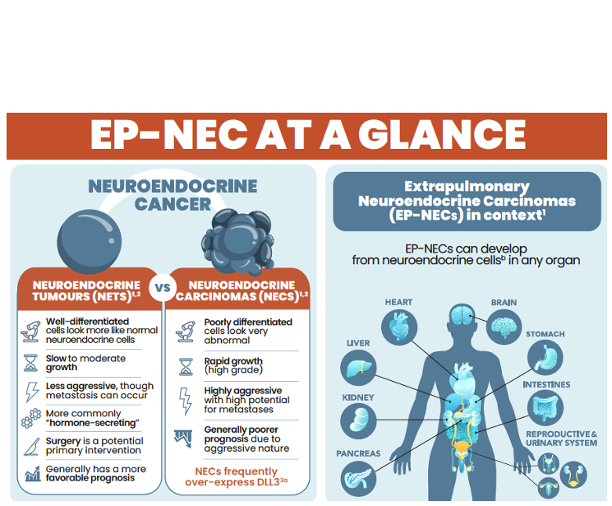
Navigating extrapulmonary neuroendocrine carcinoma (EP-NEC)

Insights for patients and care partners 

Experts
Meredith Cummins
Endorsed by
INCA
NeuroEndocrine Cancer Australia Neuroendocrine Cancer Foundation NET-Research-Foundation
Neuroendocrine Cancer UK Minkhas mission
  • clock 5 MIN
  • calendar Dec 2025
  • Non-accredited Independent Medical Education

Educational programme supported by an Independent Educational Grant from Boehringer Ingelheim 
eks
EKS / On-demand webinar
Oncology 
ESMO 2025: Gastric and gastroesophageal cancer insights for clinical practice

On-demand materials from an Experts Knowledge Share event

Experts
Dr Elizabeth Smyth, Prof. Aziz Zaanan, Prof. Markus Moehler
Endorsed by
ESDO
Digestive Cancers Europe
ICAN international cancer advocacy network
  • download Downloadable
    Resources
  • clock 67 MIN
  • calendar Dec 2025
  • Non-accredited Independent Medical Education

Educational programme supported by an Independent Educational Grant from Amgen.
podcast Video podcast
Oncology Endocrinology Rare diseases 
Understanding EP-NEC: Through diagnosis, treatment, and support

A medical oncologist and a patient advocate share their perspectives

Experts
Dr Aman Chauhan, Susan Meckler-Plummer, RN
Endorsed by
Minkhas mission Neuroendocrine Cancer UK Neuroendocrine Cancer Foundation
NET-Research-Foundation
  • download Downloadable
    Resources
  • clock 27 MIN
  • calendar Nov 2025
  • Non-accredited Independent Medical Education

Educational programme supported by an Independent Educational Grant from Boehringer Ingelheim 
conference-update Conference update
Oncology 
Update from AACR–NCI–EORTC 2025: PYNNACLE Phase 2 evaluating rezatapopt in TP53 Y220C–mutant solid tumours

Clinical insights and expert discussion

Experts
Dr Alison Schram, Dr Elena Garralda
  • download Downloadable
    Resources
  • clock 6 MIN
  • calendar Oct 2025

This programme has been sponsored by PMV Pharma