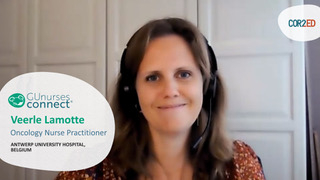
Veerle Lamotte explains why it’s important to gain insight into the goals of treatment and understand gaps in the patient's knowledge.

Watch the video and download the slides


The GUIDE Communication Framework: Strengthening shared decision-making between nmCRPC patients and the healthcare team

This is the first in a series of three newsletters explaining the GUIDE Communication Framework, a simple 5-step approach to optimise the role of the nurse in strengthening shared decision-making between nmCRPC patients and their healthcare team.

GUIDE’s five letters each represent a crucial step in your conversations with patients with prostate cancer.

  • Gain insight into goals of treatment and care
  • Understand gaps in the patient's knowledge
  • Inform and educate
  • Direct to additional support
  • Empower the patient

Veerle Lamotte covers steps 1 and 2 of the GUIDE framework and explains why it’s important to Gain insight into the goals of treatment and care as a first step in supporting your patients along the agreed treatment journey and how to Understand the gaps in the patient’s knowledge, allowing you to prioritise where you focus when it comes to informing and educating the patient.

In the second newsletter, Joanie Pfahl and Jennifer Sutton cover step 3 of the GUIDE Communication Framework and explain the importance of Informing and educating the patient, and why it is essential for nurses to have up-to-date knowledge about the disease and common symptoms, key studies relating to nmCRPC, treatment aims and options, potential side effects and proactive management as addressing patients’ knowledge gaps in the right way is critical in managing their treatment successfully.

In the third newsletter, Jason Alcorn explains how to Direct the patient and the carer to additional support and the importance of Empowering the patient, making them feel they can actively participate in the shared decision-making and treatment process, and why these steps are an important part of a successful treatment journey.


Hello, I’m Veerle Lamotte, an oncology nurse practitioner at Antwerp University Hospital, and I’m here today to talk about strengthening shared decision making between nmCPRC patients and the healthcare team using the GUIDE Communication Framework.

Today I want to talk about non-metastatic castrate-resistant prostate cancer and gain insight into the goals of treatment and understand the gaps in patients’ knowledge. nmCPRC is characterised by a progressively increasing PSA level, in the absence of clear, radiological evidence of metastatic disease, despite a castrate level of testosterone.

Gain insight into the goals of treatment

The first step of the GUIDE framework is to gain insight into the goals of treatment. Since 2018, the treatment of nmCPRC has changed dramatically, with the introduction of second-generation androgen receptor inhibitors, such as enzalutamide, darolutamide and apalutamide.

It’s essential to understand the goals of treatment from the patient’s point of view, because nmCPRC patients are usually relatively asymptomatic. The goal of treatment for the patient may be less focused on longevity, due to their age. They may be more concerned about maintaining quality of life. Moreover, a rising PSA may cause anxiety, and therefore a patient may focus on treatment of this rising PSA. Is the patient concerned about other comorbidities? What are the goals of treatment from the physician’s perspective?

A substantial percentage of patients with nmCPRC develop metastatic lesions within two years. We know that metastatic disease predominantly targets bones, and this gives a worse 5 years overall survival. Many patients also develop skeletal-related events, for example, spinal cord compression and pathologic fractures, as a consequence of bone metastasis.

And these are associated with significant pain, a decreased quality of life and utilisation of additional healthcare resources. Enzalutamide, apalutamide and darolutamide can delay the metastasis, can improve the time to initiation of cytotoxic chemotherapy, and symptomatic progression. These drugs have similar efficacy but differ in safety profiles.

Understand gaps in patient’s knowledge

We will move to the second step, and this is gaining insight into the patient’s knowledge. It’s nevertheless important to carefully assess risk and benefits when choosing a treatment, in order to improve the quality of survivorship of nmCPRC patients. A study of Srinivas suggested that nmCPRC patients and physicians were willing to trade substantial amount of survival to avoid adverse events between hypothetical treatments. Nurses should be seen as the go-to person, for the patients with nmCPRC, and therefore must empower patients through guidance and support throughout the treatment journey.

Shared decision-making

I’d like to conclude that second-generation receptor inhibitor for non-metastatic castration prostate cancer, have similar efficacy but differ in safety profiles. Inform your patients about the risk and benefits, an involved and informed patient will cope better with the side effects and also make targeted choices in his treatment. Shared decision making can provide patients the greatest chance of success. Thank you for listening on behalf of GU NURSES CONNECT, to download the slides go to gunursesconnect.info

Veerle Lamotte has worked as an oncology nurse practitioner at Antwerp University Hospital since 2013. She graduated as a nurse in 2001, working initially in intensive care before moving to work in oncology in 2010. Veerle supports and guides patients within the tumour cluster uro-oncology care process; from diagnosis, during treatment, follow-up phase and at relapse.  As an oncology nurse she has detailed knowledge and experience of urology, oncology and palliative care. Veerle is also a board member of UROBEL (the Belgian National Association for Urological Nurses) which keep nurses in Belgium informed about new strategies in uro-oncological healthcare. 

Veerle Lamotte has received financial support/sponsorship for research support, consultation, or speaker fees from the following companies:

Ipsen and Pfizer. 

Programme summary
Share this programme
This educational programme is supported by an Independent Educational Grant from Bayer
Supporter Acknowledgement
This educational programme is supported by an Independent Educational Grant from Bayer
I agree that this educational programme:

Was valuable to me

1/4
Brought to you by
GU NURSES CONNECT

GU NURSES CONNECT is an initiative of COR2ED, supported by Independent Educational Grants from AstraZeneca, Bayer, and Eisai Europe Limited.

Meet the experts Independent IME approved

Other programmes of interest

eks
EKS / On-demand webinar
Oncology 
Multiple Myeloma: Is it time to rethink how we sequence treatments?

On-demand materials from an Experts Knowledge Share event

Experts
Prof. Karthik Ramasamy, Dr Joshua Richter, Dr Faisal Basheer, Dr Andrew Charlton
  • download Downloadable
    Resources
  • clock 80 MIN
  • calendar Mar 2026

This programme has been sponsored by Menarini Stemline and is intended for HCPs in the UK only    MAT-GB-SEL-00774
conference-update Conference update

Episode

2

of 2

episode
Oncology Rare diseases Endocrinology 
Actualités du Congrès l’ENETS 2026

Points de vue d’experts sur les dernières données concernant le cancer neuroendocrinien

Experts
Prof. Louis de Mestier, Prof. Timon Vandamme, Dr Alice Durand
  • clock 5 MIN
  • calendar Mar 2026
  • Non-accredited Independent Medical Education

Cette vidéo est soutenue par une subvention indépendante à visée éducative d’Ipsen.  Les contenus publiés sur ce site internet sont sous la responsabilité de leurs auteurs. Certaines données scientifiques publiées sur ce site sont susceptibles de ne pas être validées par la commission d’Autorisation de Mise sur le Marché, et ne doivent pas être mises en pratique. Elles doivent être lues et comprises avec le plus grand discernement et sont données dans leur cadre de la diffusion de l’information sur l’état actuel de la recherche auprès de la communauté scientifique internationale  
conference-update Conference update

Episode

1

of 2

episode
Oncology Rare diseases Endocrinology 
Update from ENETS 2026

Experts share their views on latest data in neuroendocrine cancer

Experts
Prof. Louis de Mestier, Prof. Timon Vandamme, Dr Alice Durand
  • clock 5 MIN
  • calendar Mar 2026
  • Non-accredited Independent Medical Education

This educational programme is supported by an Independent Educational Grant from Ipsen. The content published on this website is under the responsibility of its authors. Some scientific data published on this website may not have been validated by the relevant Marketing Authorisation Committees and should not be put into practice. It should be read and understood with the utmost discernment and is provided for the purpose of disseminating information on the current state of research to the international scientific community.
conference-update Conference update
Oncology 
Update from ESGO 2026 – PYNNACLE Phase 2 study: Interim results from the ovarian cancer cohort

Clinical insights and expert discussion

Experts
Prof. Domenica Lorusso, Prof. Jean-Sebastien Frenel
  • download Downloadable
    Resources
  • clock 5 MIN
  • calendar Mar 2026

This programme has been sponsored by PMV Pharma and is intended for HCPs only.
publication Scientific Publication
Oncology 
ADCs in HER2+ metastatic breast cancer and management of adverse events

Consensus-based guidance for clinicians and patients

Experts
Prof. Javier Cortés, Prof. Giuseppe Curigliano, Prof. Shaheenah Dawood, Dr Grażyna Suchodolska, Dr Sara Tolaney, Carla Whitbread
Endorsed by
EONS - European Oncology Nursing Society Europa Donna
  • download Downloadable
    Resources
  • clock 20 MIN
  • calendar Feb 2026
  • Non-accredited Independent Medical Education

Educational programme supported by an Independent Educational Grant from AstraZeneca