Watch the video and download the slides


Treatment sequencing for mCRPC: Providing crucial support to the patient

GU NURSES CONNECT expert Brenda Martone provides a summary of how a GU nurse can provide crucial support to patients during treatment sequencing decisions for metastatic castration-resistant prostate cancer (mCRPC).

Brenda outlines the importance of helping patients understand the available treatments and their mechanism of action as well as explaining potential side effects to patients. For patients with mCRPC, treatment sequencing is evolving with the variety of available treatment options (e.g. 2nd-generation ARTAs, PARP inhibitors, immunotherapy, chemotherapy, and radiolabelled isotopes) and individualisation of treatment is important, along with considering patient preferences and quality of life.

Watch the video and download the slides.

My name is Brenda Martone and I’m a nurse practitioner at Northwestern Medicine in Chicago Illinois. I’m going to be discussing sequencing treatment in metastatic CRPC, common side effects and the mutual decision making process in the role of the GU nurse.

How do we decide which treatment for which patient?

Clinical factors guide treatment decision-making. Being aware of the prior treatments and looking for a novel mechanism of action. What options are available in my practice location? Is the patient a chemotherapy candidate because there are chemotherapy options available for these patients? Consideration is being looked at to avoid sequencing AR targeted agents. Does the patient have targeted DRD mutations making this patient a potential candidate to get a Checkpoint Inhibitor? Does the patient have a homologous recombination repair mutation making a PARP inhibitor an option? And always thinking about what clinical trials are available for this patient at the present time. While we may not be the prescribers of these treatments it is important for us to understand how treatment decisions are made.

How do I answer the question of what are my choices and what are the side effects?

We have our second generation AR inhibitors and it’s important to monitor for liver dysfunction and electrolytes, as well as hypertension, fatigue, and increased risk of falls for those on enzalutamide.

We have our PARP inhibitors. We monitor closely for anaemia which is the most common side effect, as well as fatigue, nausea, vomiting, diarrhoea or loss of appetite.

Chemotherapies include the taxanes which is docetaxel or cabazitaxel. Of course close monitoring of blood counts but focusing on peripheral neuropathies, it’s important to make sure our patients are buttoning buttons, zipping zippers, tying their shoes, more so in the second line setting with cabazitaxel because they’ll have already have received docetaxel and they may be starting treatment on a baseline of peripheral neuropathies.

We have our immunotherapies, Sipuleucel-T which is an autologous activated immune therapy and we have our checkpoint inhibitor with pembrolizumab. Sipuleucel-T the most common side-effects are headache, fever and chills, usually with infusion. Pembrolizumab most common side effects when you’re taking the brakes off the immune system, could be immune related.

I spend time talking to patients. Telling them they shouldn’t have nausea, vomiting, diarrhoea, shortness of breath, abdominal pain or profound fatigue. These could all indicate an immune related adverse event.

We do have radiolabelled isotopes, which is radium-223 here in the US. It is targeted to the bone, taken up by the bone, and delivers a targeted dose of radiation locally. It is associated with decreased blood count so you need to check CBC before each dose and also monitor for nausea, vomiting, diarrhoea and fatigue.

What is the role of the GU nurse in sequencing metastatic prostate cancer treatments?

I think our most important role is that of mutual decision-making. We support our patients to articulate their understanding of their condition and what they hope to achieve from treatment. We provide them an opportunity to discuss options and benefits. We discuss potential risks and management of those risks. We tell them how these risks may impact them and their existing medical conditions. We ask patients their preferences and we most definitely answer their questions.

Thank you for listening on behalf of GU Nurses CONNECT. Please go to gunursesconnect.cor2ed.com to download the slides.

Brenda Martone is a board-certified adult nurse practitioner working in GU oncology at Northwestern Medicine, Chicago, IL. She graduated with her BSN from Concordia College/West Suburban College of Nursing in 1989, received her MSN/CNS degree from Loyola University in 1996 and then completed a post-master’s certificate to become an adult nurse practitioner from Rush University in 2008.  Brenda is an advanced oncology certified nurse practitioner and has been an oncology nurse for over 31 years.  She has been a member of several medical advisory boards, as well as developed programs about metastatic and non-metastatic castration-resistant prostate cancer.  Brenda Martone is a frequent national and regional lecturer and a member of the Advanced Practitioner Society for Hematology and Oncology (APSHO).

Brenda Martone has received financial support/sponsorship for research support, consultation, or speaker fees from the following companies:

Astellas, Bhealth and Pfizer. 

Programme summary
Watch the video now
Share this programme
This educational programme is supported by an Independent Educational Grant from Bayer
Supporter Acknowledgement
This educational programme is supported by an Independent Educational Grant from Bayer
I agree that this educational programme:

Was valuable to me

1/4
Brought to you by
GU NURSES CONNECT

GU NURSES CONNECT is an initiative of COR2ED, supported by Independent Educational Grants from AstraZeneca, Bayer, and Eisai Europe Limited.

Meet the experts Independent IME approved

Other programmes of interest

eks
EKS / On-demand webinar
Oncology 
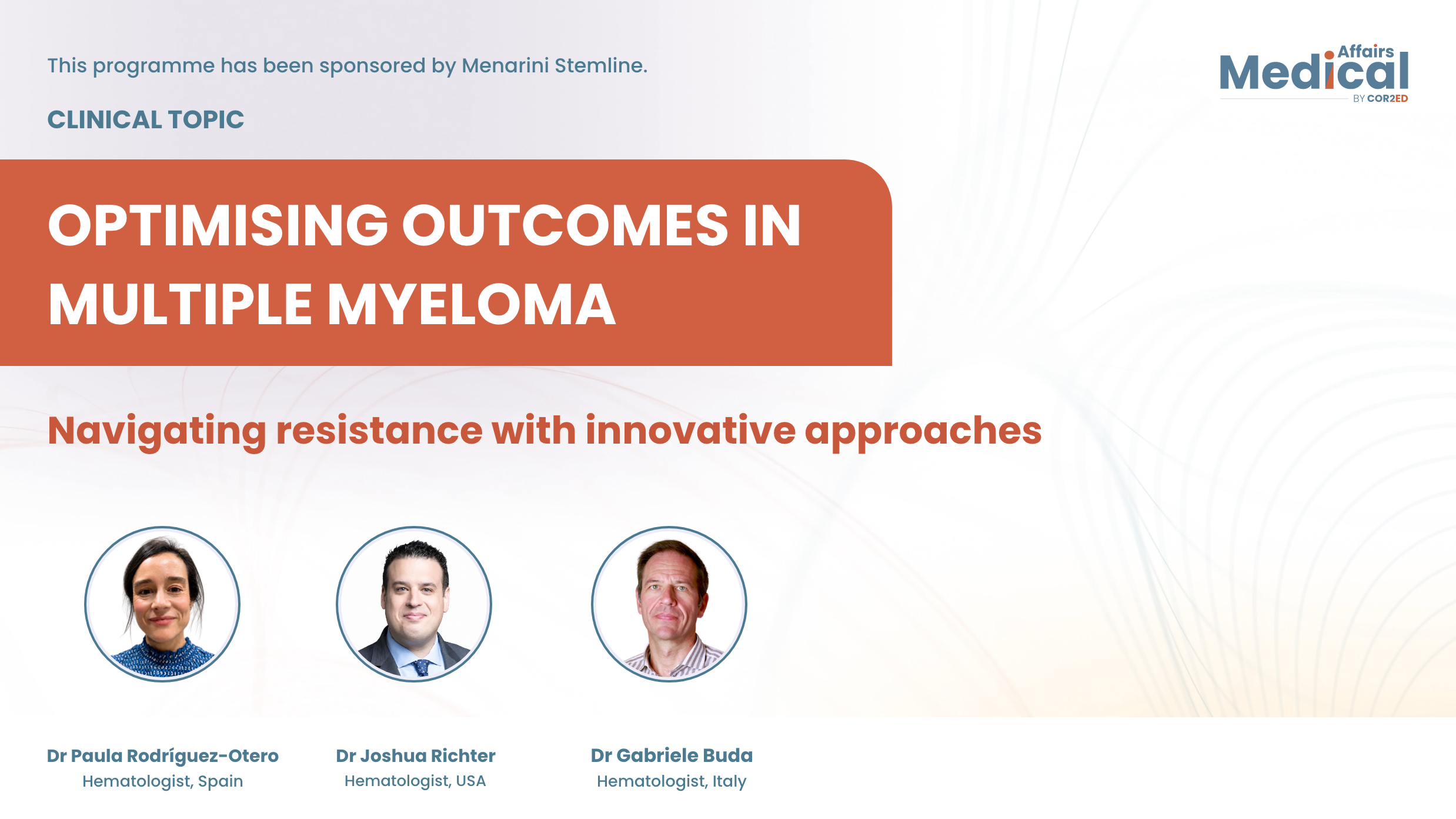
Multiple Myeloma: Is it time to rethink how we sequence treatments?

On-demand materials from an Experts Knowledge Share event

Experts
Prof. Karthik Ramasamy, Dr Joshua Richter, Dr Faisal Basheer, Dr Andrew Charlton
  • download Downloadable
    Resources
  • clock 80 MIN
  • calendar Mar 2026

This programme has been sponsored by Menarini Stemline and is intended for HCPs in the UK only    MAT-GB-SEL-00774
conference-update Conference update

Episode

2

of 2

episode
Oncology Rare diseases Endocrinology 
Actualités du Congrès l’ENETS 2026

Points de vue d’experts sur les dernières données concernant le cancer neuroendocrinien

Experts
Prof. Louis de Mestier, Prof. Timon Vandamme, Dr Alice Durand
  • clock 5 MIN
  • calendar Mar 2026
  • Non-accredited Independent Medical Education

Cette vidéo est soutenue par une subvention indépendante à visée éducative d’Ipsen.  Les contenus publiés sur ce site internet sont sous la responsabilité de leurs auteurs. Certaines données scientifiques publiées sur ce site sont susceptibles de ne pas être validées par la commission d’Autorisation de Mise sur le Marché, et ne doivent pas être mises en pratique. Elles doivent être lues et comprises avec le plus grand discernement et sont données dans leur cadre de la diffusion de l’information sur l’état actuel de la recherche auprès de la communauté scientifique internationale  
conference-update Conference update

Episode

1

of 2

episode
Oncology Rare diseases Endocrinology 
Update from ENETS 2026

Experts share their views on latest data in neuroendocrine cancer

Experts
Prof. Louis de Mestier, Prof. Timon Vandamme, Dr Alice Durand
  • clock 5 MIN
  • calendar Mar 2026
  • Non-accredited Independent Medical Education

This educational programme is supported by an Independent Educational Grant from Ipsen. The content published on this website is under the responsibility of its authors. Some scientific data published on this website may not have been validated by the relevant Marketing Authorisation Committees and should not be put into practice. It should be read and understood with the utmost discernment and is provided for the purpose of disseminating information on the current state of research to the international scientific community.
conference-update Conference update
Oncology 
Update from ESGO 2026 – PYNNACLE Phase 2 study: Interim results from the ovarian cancer cohort

Clinical insights and expert discussion

Experts
Prof. Domenica Lorusso, Prof. Jean-Sebastien Frenel
  • download Downloadable
    Resources
  • clock 5 MIN
  • calendar Mar 2026

This programme has been sponsored by PMV Pharma and is intended for HCPs only.
publication Scientific Publication
Oncology 
ADCs in HER2+ metastatic breast cancer and management of adverse events

Consensus-based guidance for clinicians and patients

Experts
Prof. Javier Cortés, Prof. Giuseppe Curigliano, Prof. Shaheenah Dawood, Dr Grażyna Suchodolska, Dr Sara Tolaney, Carla Whitbread
Endorsed by
EONS - European Oncology Nursing Society Europa Donna
  • download Downloadable
    Resources
  • clock 20 MIN
  • calendar Feb 2026
  • Non-accredited Independent Medical Education

Educational programme supported by an Independent Educational Grant from AstraZeneca