
Gli infarti non si manifestano sempre allo stesso modo, e riconoscere i segnali d'allarme precocemente può salvare la vita. 


Questo breve video animato, sviluppato con i cardiologi Prof. Gilles Montalescot e Prof. Marco Valgimigli, spiega i sintomi di un infarto, perché ogni minuto è prezioso e cosa fare se tu o qualcuno vicino a te avverte un insolito fastidio al petto. 


Il video presenta la testimonianza di un paziente e sottolinea l'impatto emotivo di un infarto, nonché l'importanza di agire velocemente e chiamare i servizi di emergenza.


Imparerete: 

  • I sintomi comuni e meno comuni di infarto e di infarto ricorrente
  • Come i sintomi iniziali e ricorrenti possano differire nelle donne, negli anziani e nelle persone affette da diabete o malattia renale 
  • Perché un'azione immediata è fondamentale 
  • Che il recupero è sia fisico che emotivo 


Scaricate l'infografica di supporto e condividete queste risorse per aiutare gli altri a riconoscere precocemente i segnali di allarme.


Punti chiave clinici 

  • I sintomi di infarto sono comunemente localizzati nel torace e possono irradiarsi al braccio sinistro o al collo, ma possono variare molto da persona a persona.
  • Donne, anziani e individui con diabete o malattia renale hanno maggiori probabilità di manifestare sintomi meno comuni.
  • Un secondo infarto può manifestarsi in modo differente, quindi è importante prestare attenzione a qualsiasi sensazione o disagio toracico insolito. 
  • Se avvertite qualcosa di insolito o preoccupante nel vostro torace che dura più di qualche minuto, chiamate immediatamente i servizi di emergenza, poiché agire velocemente può salvare il vostro cuore e la vostra vita.
  • Avere un infarto aumenta la probabilità di averne un altro, quindi riconoscere rapidamente i sintomi e seguire il vostro piano di cura e i cambiamenti dello stile di vita è essenziale.
  • È normale sentirsi spaventati, preoccupati o giù di morale dopo un infarto; parlare con il proprio medico, la famiglia o un gruppo di supporto può facilitare il recupero e ricostruire la fiducia.
  • Aumentare la consapevolezza dei sintomi iniziali e ricorrenti dell'infarto miocardico (IM) 
  • Migliorare il riconoscimento e la risposta tempestiva all'IM iniziale e ricorrente 
  • Migliorare la comprensione dei fattori di rischio dell'IM iniziale e ricorrente 
  • Affrontare l'impatto psicologico del primo IM

Gilles Montalescot is Professor of Cardiology at the Pitié Salpêtrière Hospital in Paris, France, where he heads the Department of Cardiology at the Institute of Cardiology. He is a practicing Interventional Cardiologist and has extensive experience in basic and clinical research. He has been the director of the INSERM research Unit UMRS_1166 on Thrombosis for 10 years.


Dr Montalescot has been an investigator for many of the new drugs developed in the past twenty years as well as for many of the new interventional technologies. Dr Montalescot is a senior scientist and has been the lead investigator of many national or international randomized trials including ADMIRAL, ARMADA, ALBION, STEEPLE, ARCHIPELAGO, ABOARD, ACAPULCO, ATOLL, ARCTIC, ANTARCTIC, ACCOAST, ATLANTIC, AEGEAN, AMERICA, ALBATROS, and the ongoing ATLANTIS, ALPHEUS, ARAMIS, ADRIFT trials.


Dr Montalescot is the Chairman of the ACTION study group, an Academic Research Organization based at Pitié Salpêtrière Hospital in Paris. He has served on several task force committees on antithrombotic drugs and acute coronary syndromes and is the current Chairman of the Stable Coronary Artery disease guidelines of the European Society of Cardiology.


Dr Montalescot has received several awards in his country including the J. Valade Prize from the Fondation de France and the J.Escalle award from the National Academy of Medicine. He is a member of several editorial boards and has published over 600 peer reviewed original articles in journals such as the NEJM, JAMA, Lancet. Internationally, Dr Montalescot has also been an invited speaker at plenary sessions of major congresses such as the European Society of Cardiology, the American College of Cardiology ,and the American Heart Association.

Prof. Gilles Montalescot has received financial support/sponsorship for research support, consultation, or speaker fees from the following companies:

Abbott, Acutebio, Amgen, Boehringer-Ingelheim, Celecor, Cell Prothera, Corflow, Hexacath, Idorsia, MSD, New Amsterdam, Novo Nordisk, Sanofi, SMT. 

Prof. Marco Valgimigli is an Interventional Cardiologist and Deputy Chief of Cardiology at the Cardiocentro Ticino Institute in Lugano, Switzerland and head of clinical research.  He is Professor of Medicine, Faculty of Biomedical Sciences at Università della Svizzera Italiana, Lugano, Switzerland. 


He obtained his medical degree in 1997 with Summa Cum Laude at the University of Bologna, Italy, and completed his training in internal medicine at the same university (1997-1999). He received a degree in cardiological sciences at the University of Ferrara and a PhD in interventional cardiology at Erasmus Medical Center in Rotterdam.


Prof. Valgimigli is a fellow of the European Society of Cardiology (ESC), he is part of the press committee since 2006 and vice chairman of the EAPCI research committee since 2012. He also took as member of the ESC 2013 STEMI and 2014 Revascularization guidelines. He led as principal investigators more than 20 multicenter clinical trials and served as member, section coordinator or chairperson of multiple European Society of Cardiology (ESC) guidelines.


Prof. Valgimigli has published more than 700 peer-reviewed manuscripts, with research interests spanning from coronary and structural interventions to anti-thrombotics. With an H-index of 118 in Scopus and more than 5000 citations, he has been awarded with the highly Cited Researcher title in the field of medicine since 2017.

Prof. Marco Valgimigli has received financial support/sponsorship for research support, consultation, or speaker fees from the following companies:

Abbott Vascular, Alvimedica, AstraZeneca, Biotronic, Chiesi Pharma, Concept Medical, Cordis, Corflow, Daiichi Sankyo, Idorsia, Johnson & Johnson Janssen, Novartis, Om Pharma, Swiss National Science Foundation (SNF), Terumo Inc, Vesalio, 

Gli infarti non si manifestano sempre allo stesso modo, e riconoscere i segnali d'allarme precocemente può salvare la vita. 


Questo breve video animato, sviluppato con i cardiologi Prof. Gilles Montalescot e Prof. Marco Valgimigli, spiega i sintomi di un infarto, perché ogni minuto è prezioso e cosa fare se tu o qualcuno vicino a te avverte un insolito fastidio al petto. 


Il video presenta la testimonianza di un paziente e sottolinea l'impatto emotivo di un infarto, nonché l'importanza di agire velocemente e chiamare i servizi di emergenza.


Imparerete: 

  • I sintomi comuni e meno comuni di infarto e di infarto ricorrente
  • Come i sintomi iniziali e ricorrenti possano differire nelle donne, negli anziani e nelle persone affette da diabete o malattia renale 
  • Perché un'azione immediata è fondamentale 
  • Che il recupero è sia fisico che emotivo 


Scaricate l'infografica di supporto e condividete queste risorse per aiutare gli altri a riconoscere precocemente i segnali di allarme.


Punti chiave clinici 

  • I sintomi di infarto sono comunemente localizzati nel torace e possono irradiarsi al braccio sinistro o al collo, ma possono variare molto da persona a persona.
  • Donne, anziani e individui con diabete o malattia renale hanno maggiori probabilità di manifestare sintomi meno comuni.
  • Un secondo infarto può manifestarsi in modo differente, quindi è importante prestare attenzione a qualsiasi sensazione o disagio toracico insolito. 
  • Se avvertite qualcosa di insolito o preoccupante nel vostro torace che dura più di qualche minuto, chiamate immediatamente i servizi di emergenza, poiché agire velocemente può salvare il vostro cuore e la vostra vita.
  • Avere un infarto aumenta la probabilità di averne un altro, quindi riconoscere rapidamente i sintomi e seguire il vostro piano di cura e i cambiamenti dello stile di vita è essenziale.
  • È normale sentirsi spaventati, preoccupati o giù di morale dopo un infarto; parlare con il proprio medico, la famiglia o un gruppo di supporto può facilitare il recupero e ricostruire la fiducia.
  • Aumentare la consapevolezza dei sintomi iniziali e ricorrenti dell'infarto miocardico (IM) 
  • Migliorare il riconoscimento e la risposta tempestiva all'IM iniziale e ricorrente 
  • Migliorare la comprensione dei fattori di rischio dell'IM iniziale e ricorrente 
  • Affrontare l'impatto psicologico del primo IM

Gilles Montalescot is Professor of Cardiology at the Pitié Salpêtrière Hospital in Paris, France, where he heads the Department of Cardiology at the Institute of Cardiology. He is a practicing Interventional Cardiologist and has extensive experience in basic and clinical research. He has been the director of the INSERM research Unit UMRS_1166 on Thrombosis for 10 years.


Dr Montalescot has been an investigator for many of the new drugs developed in the past twenty years as well as for many of the new interventional technologies. Dr Montalescot is a senior scientist and has been the lead investigator of many national or international randomized trials including ADMIRAL, ARMADA, ALBION, STEEPLE, ARCHIPELAGO, ABOARD, ACAPULCO, ATOLL, ARCTIC, ANTARCTIC, ACCOAST, ATLANTIC, AEGEAN, AMERICA, ALBATROS, and the ongoing ATLANTIS, ALPHEUS, ARAMIS, ADRIFT trials.


Dr Montalescot is the Chairman of the ACTION study group, an Academic Research Organization based at Pitié Salpêtrière Hospital in Paris. He has served on several task force committees on antithrombotic drugs and acute coronary syndromes and is the current Chairman of the Stable Coronary Artery disease guidelines of the European Society of Cardiology.


Dr Montalescot has received several awards in his country including the J. Valade Prize from the Fondation de France and the J.Escalle award from the National Academy of Medicine. He is a member of several editorial boards and has published over 600 peer reviewed original articles in journals such as the NEJM, JAMA, Lancet. Internationally, Dr Montalescot has also been an invited speaker at plenary sessions of major congresses such as the European Society of Cardiology, the American College of Cardiology ,and the American Heart Association.

Prof. Gilles Montalescot has received financial support/sponsorship for research support, consultation, or speaker fees from the following companies:

Abbott, Acutebio, Amgen, Boehringer-Ingelheim, Celecor, Cell Prothera, Corflow, Hexacath, Idorsia, MSD, New Amsterdam, Novo Nordisk, Sanofi, SMT. 

Prof. Marco Valgimigli is an Interventional Cardiologist and Deputy Chief of Cardiology at the Cardiocentro Ticino Institute in Lugano, Switzerland and head of clinical research.  He is Professor of Medicine, Faculty of Biomedical Sciences at Università della Svizzera Italiana, Lugano, Switzerland. 


He obtained his medical degree in 1997 with Summa Cum Laude at the University of Bologna, Italy, and completed his training in internal medicine at the same university (1997-1999). He received a degree in cardiological sciences at the University of Ferrara and a PhD in interventional cardiology at Erasmus Medical Center in Rotterdam.


Prof. Valgimigli is a fellow of the European Society of Cardiology (ESC), he is part of the press committee since 2006 and vice chairman of the EAPCI research committee since 2012. He also took as member of the ESC 2013 STEMI and 2014 Revascularization guidelines. He led as principal investigators more than 20 multicenter clinical trials and served as member, section coordinator or chairperson of multiple European Society of Cardiology (ESC) guidelines.


Prof. Valgimigli has published more than 700 peer-reviewed manuscripts, with research interests spanning from coronary and structural interventions to anti-thrombotics. With an H-index of 118 in Scopus and more than 5000 citations, he has been awarded with the highly Cited Researcher title in the field of medicine since 2017.

Prof. Marco Valgimigli has received financial support/sponsorship for research support, consultation, or speaker fees from the following companies:

Abbott Vascular, Alvimedica, AstraZeneca, Biotronic, Chiesi Pharma, Concept Medical, Cordis, Corflow, Daiichi Sankyo, Idorsia, Johnson & Johnson Janssen, Novartis, Om Pharma, Swiss National Science Foundation (SNF), Terumo Inc, Vesalio, 

Gli infarti non si manifestano sempre allo stesso modo, e riconoscere i segnali d'allarme precocemente può salvare una vita. 


Questo breve video animato, sviluppato con i cardiologi Prof. Gilles Montalescot e Prof. Marco Valgimigli, spiega i sintomi di un infarto, perché ogni minuto è prezioso e cosa fare se tu o qualcuno vicino a te avverte un insolito fastidio al petto. 


Il video presenta una testimonianza del paziente e sottolinea l'impatto emotivo di un infarto, nonché l'importanza di agire velocemente e chiamare i servizi di emergenza.


Imparerete: 

  • I sintomi comuni e meno comuni di infarto e di infarto ricorrente
  • Come i sintomi iniziali e ricorrenti possano differire nelle donne, negli anziani e nelle persone affette da diabete o malattia renale 
  • Perché un'azione immediata è fondamentale 
  • Che il recupero è sia fisico che emotivo 


Scaricate l'infografica di accompagnamento e condividete queste risorse per aiutare gli altri a riconoscere precocemente i segni. 


Punti chiave clinici 

  • I sintomi di infarto sono comunemente localizzati nel torace e possono irradiarsi al braccio sinistro o al collo, ma possono variare molto da persona a persona.
  • Donne, anziani e individui con diabete o malattia renale hanno maggiori probabilità di manifestare sintomi meno comuni.
  • Un secondo infarto può manifestarsi in modo differente, quindi è importante prestare attenzione a qualsiasi sensazione o disagio toracico insolito. 
  • Se avvertite qualcosa di insolito o preoccupante nel vostro torace che dura più di qualche minuto, chiamate immediatamente i servizi di emergenza, poiché agire velocemente può salvare il vostro cuore e la vostra vita.
  • Avere un infarto aumenta la probabilità di averne un altro, quindi riconoscere rapidamente i sintomi e seguire il vostro piano di cura e i cambiamenti dello stile di vita è essenziale.
  • È normale sentirsi spaventati, preoccupati o giù di morale dopo un infarto; parlare con il proprio medico, la famiglia o un gruppo di supporto può facilitare il recupero e ricostruire la fiduc
  • Aumentare la consapevolezza dei sintomi iniziali e ricorrenti dell'infarto miocardico (IM) 
  • Migliorare il riconoscimento e la risposta tempestiva all'IM iniziale e ricorrente 
  • Migliorare la comprensione dei fattori di rischio dell'IM iniziale e ricorrente 
  • Affrontare l'impatto psicologico del primo IM

Gilles Montalescot is Professor of Cardiology at the Pitié Salpêtrière Hospital in Paris, France, where he heads the Department of Cardiology at the Institute of Cardiology. He is a practicing Interventional Cardiologist and has extensive experience in basic and clinical research. He has been the director of the INSERM research Unit UMRS_1166 on Thrombosis for 10 years.


Dr Montalescot has been an investigator for many of the new drugs developed in the past twenty years as well as for many of the new interventional technologies. Dr Montalescot is a senior scientist and has been the lead investigator of many national or international randomized trials including ADMIRAL, ARMADA, ALBION, STEEPLE, ARCHIPELAGO, ABOARD, ACAPULCO, ATOLL, ARCTIC, ANTARCTIC, ACCOAST, ATLANTIC, AEGEAN, AMERICA, ALBATROS, and the ongoing ATLANTIS, ALPHEUS, ARAMIS, ADRIFT trials.


Dr Montalescot is the Chairman of the ACTION study group, an Academic Research Organization based at Pitié Salpêtrière Hospital in Paris. He has served on several task force committees on antithrombotic drugs and acute coronary syndromes and is the current Chairman of the Stable Coronary Artery disease guidelines of the European Society of Cardiology.


Dr Montalescot has received several awards in his country including the J. Valade Prize from the Fondation de France and the J.Escalle award from the National Academy of Medicine. He is a member of several editorial boards and has published over 600 peer reviewed original articles in journals such as the NEJM, JAMA, Lancet. Internationally, Dr Montalescot has also been an invited speaker at plenary sessions of major congresses such as the European Society of Cardiology, the American College of Cardiology ,and the American Heart Association.

Prof. Gilles Montalescot has received financial support/sponsorship for research support, consultation, or speaker fees from the following companies:

Abbott, Acutebio, Amgen, Boehringer-Ingelheim, Celecor, Cell Prothera, Corflow, Hexacath, Idorsia, MSD, New Amsterdam, Novo Nordisk, Sanofi, SMT. 

Prof. Marco Valgimigli is an Interventional Cardiologist and Deputy Chief of Cardiology at the Cardiocentro Ticino Institute in Lugano, Switzerland and head of clinical research.  He is Professor of Medicine, Faculty of Biomedical Sciences at Università della Svizzera Italiana, Lugano, Switzerland. 


He obtained his medical degree in 1997 with Summa Cum Laude at the University of Bologna, Italy, and completed his training in internal medicine at the same university (1997-1999). He received a degree in cardiological sciences at the University of Ferrara and a PhD in interventional cardiology at Erasmus Medical Center in Rotterdam.


Prof. Valgimigli is a fellow of the European Society of Cardiology (ESC), he is part of the press committee since 2006 and vice chairman of the EAPCI research committee since 2012. He also took as member of the ESC 2013 STEMI and 2014 Revascularization guidelines. He led as principal investigators more than 20 multicenter clinical trials and served as member, section coordinator or chairperson of multiple European Society of Cardiology (ESC) guidelines.


Prof. Valgimigli has published more than 700 peer-reviewed manuscripts, with research interests spanning from coronary and structural interventions to anti-thrombotics. With an H-index of 118 in Scopus and more than 5000 citations, he has been awarded with the highly Cited Researcher title in the field of medicine since 2017.

Prof. Marco Valgimigli has received financial support/sponsorship for research support, consultation, or speaker fees from the following companies:

Abbott Vascular, Alvimedica, AstraZeneca, Biotronic, Chiesi Pharma, Concept Medical, Cordis, Corflow, Daiichi Sankyo, Idorsia, Johnson & Johnson Janssen, Novartis, Om Pharma, Swiss National Science Foundation (SNF), Terumo Inc, Vesalio, 

Programme summary
Watch the video now
Other episodes of this series
Heart attack warning signs everyone should know

Heart attack warning signs everyone should know

Recognising heart attack symptoms and acting fast

Signes avant-coureurs de la crise cardiaque que tout le monde doit connaître

Signes avant-coureurs de la crise cardiaque que tout le monde doit connaître

Reconnaître les symptômes d’une crise cardiaque et agir vite

Segnali di avvertimento di infarto che tutti dovrebbero conoscere

Segnali di avvertimento di infarto che tutti dovrebbero conoscere

Riconoscere i sintomi di infarto e agire rapidamente

Current Episode
Warnsignale eines Herzinfarkts, die jeder kennen sollt

Warnsignale eines Herzinfarkts, die jeder kennen sollt

Herzinfarkt-Symptome erkennen und schnell handeln

Знаци упозорења на  срчани удар које би свако требало да зна

Знаци упозорења на срчани удар које би свако требало да зна

Препознавање симптома срчаног удара и брза реакција

Share this programme
Questo programma educativo è sostenuto da un Supporto Educazionale Indipendente di Viatris.
Supporter Acknowledgement
Questo programma educativo è sostenuto da un Supporto Educazionale Indipendente di Viatris.
Endorsement
I agree that this educational programme:

Was valuable to me

1/4
Brought to you by
CORONARY CONNECT

CORONARY CONNECT is an initiative of COR2ED, supported by Independent Educational Grants from Amgen and Viatris.

Meet the experts Independent IME approved
Programme summary
Watch the video now
Other episodes of this series
Heart attack warning signs everyone should know

Heart attack warning signs everyone should know

Recognising heart attack symptoms and acting fast

Signes avant-coureurs de la crise cardiaque que tout le monde doit connaître

Signes avant-coureurs de la crise cardiaque que tout le monde doit connaître

Reconnaître les symptômes d’une crise cardiaque et agir vite

Segnali di avvertimento di infarto che tutti dovrebbero conoscere

Segnali di avvertimento di infarto che tutti dovrebbero conoscere

Riconoscere i sintomi di infarto e agire rapidamente

Current Episode
Warnsignale eines Herzinfarkts, die jeder kennen sollt

Warnsignale eines Herzinfarkts, die jeder kennen sollt

Herzinfarkt-Symptome erkennen und schnell handeln

Знаци упозорења на  срчани удар које би свако требало да зна

Знаци упозорења на срчани удар које би свако требало да зна

Препознавање симптома срчаног удара и брза реакција

Share this programme
Questo programma educativo è sostenuto da un Supporto Educazionale Indipendente di Viatris.
Supporter Acknowledgement
Questo programma educativo è sostenuto da un Supporto Educazionale Indipendente di Viatris.
Endorsement
I agree that this educational programme:

Was valuable to me

1/4
Brought to you by
CORONARY CONNECT

CORONARY CONNECT is an initiative of COR2ED, supported by Independent Educational Grants from Amgen and Viatris.

Meet the experts Independent IME approved
Programme summary
Other episodes of this series
Heart attack warning signs everyone should know

Heart attack warning signs everyone should know

Recognising heart attack symptoms and acting fast

Signes avant-coureurs de la crise cardiaque que tout le monde doit connaître

Signes avant-coureurs de la crise cardiaque que tout le monde doit connaître

Reconnaître les symptômes d’une crise cardiaque et agir vite

Segnali di avvertimento di infarto che tutti dovrebbero conoscere

Segnali di avvertimento di infarto che tutti dovrebbero conoscere

Riconoscere i sintomi di infarto e agire rapidamente

Current Episode
Warnsignale eines Herzinfarkts, die jeder kennen sollt

Warnsignale eines Herzinfarkts, die jeder kennen sollt

Herzinfarkt-Symptome erkennen und schnell handeln

Знаци упозорења на  срчани удар које би свако требало да зна

Знаци упозорења на срчани удар које би свако требало да зна

Препознавање симптома срчаног удара и брза реакција

Share this programme
Questo programma educativo è sostenuto da un Supporto Educazionale Indipendente di Viatris.
Supporter Acknowledgement
Questo programma educativo è sostenuto da un Supporto Educazionale Indipendente di Viatris.
Endorsement
I agree that this educational programme:

Was valuable to me

1/4
Brought to you by
CORONARY CONNECT

CORONARY CONNECT is an initiative of COR2ED, supported by Independent Educational Grants from Amgen and Viatris.

Meet the experts Independent IME approved

Other programmes of interest

animated-video Animated Video

Episode

4

of 5

episode
Cardiology 
Warnsignale eines Herzinfarkts, die jeder kennen sollt

Herzinfarkt-Symptome erkennen und schnell handeln

Experts
Prof. Gilles Montalescot, Prof. Marco Valgimigli
Endorsed by
Parole & Réaction
Ticino Cuore Foundation 
  • download Downloadable
    Resources
  • clock 3 MIN
  • calendar Mar 2026
  • Non-accredited Independent Medical Education

Dieses Bildungsprogramm wird durch einen Unabhängigen Bildungszuschuss von Viatris unterstützt. 
animated-video Animated Video

Episode

2

of 5

episode
Cardiology 
Signes avant-coureurs de la crise cardiaque que tout le monde doit connaître

Reconnaître les symptômes d’une crise cardiaque et agir vite

Experts
Prof. Gilles Montalescot, Prof. Marco Valgimigli
Endorsed by
Parole & Réaction
Ticino Cuore Foundation 
  • download Downloadable
    Resources
  • clock 3 MIN
  • calendar Mar 2026
  • Non-accredited Independent Medical Education

Educational programme supported by an Independent Educational Grant from Viatris
animated-video Animated Video

Episode

5

of 5

episode
Cardiology 
Знаци упозорења на срчани удар које би свако требало да зна

Препознавање симптома срчаног удара и брза реакција

Experts
Prof. Gilles Montalescot, Prof. Marco Valgimigli
Endorsed by
Parole & Réaction
Ticino Cuore Foundation 
  • download Downloadable
    Resources
  • clock 3 MIN
  • calendar Mar 2026
  • Non-accredited Independent Medical Education

Овај едукативни програм подржан је кроз Независни образовни грант компаније Виатрис. 
animated-video Animated Video

Episode

1

of 5

episode
Cardiology 
Heart attack warning signs everyone should know

Recognising heart attack symptoms and acting fast

Experts
Prof. Gilles Montalescot, Prof. Marco Valgimigli
Endorsed by
Parole & Réaction
Ticino Cuore Foundation 
  • download Downloadable
    Resources
  • clock 3 MIN
  • calendar Jan 2026
  • Non-accredited Independent Medical Education

Educational programme supported by an Independent Educational Grant from Viatris
conference-update Conference update
Cardiology 
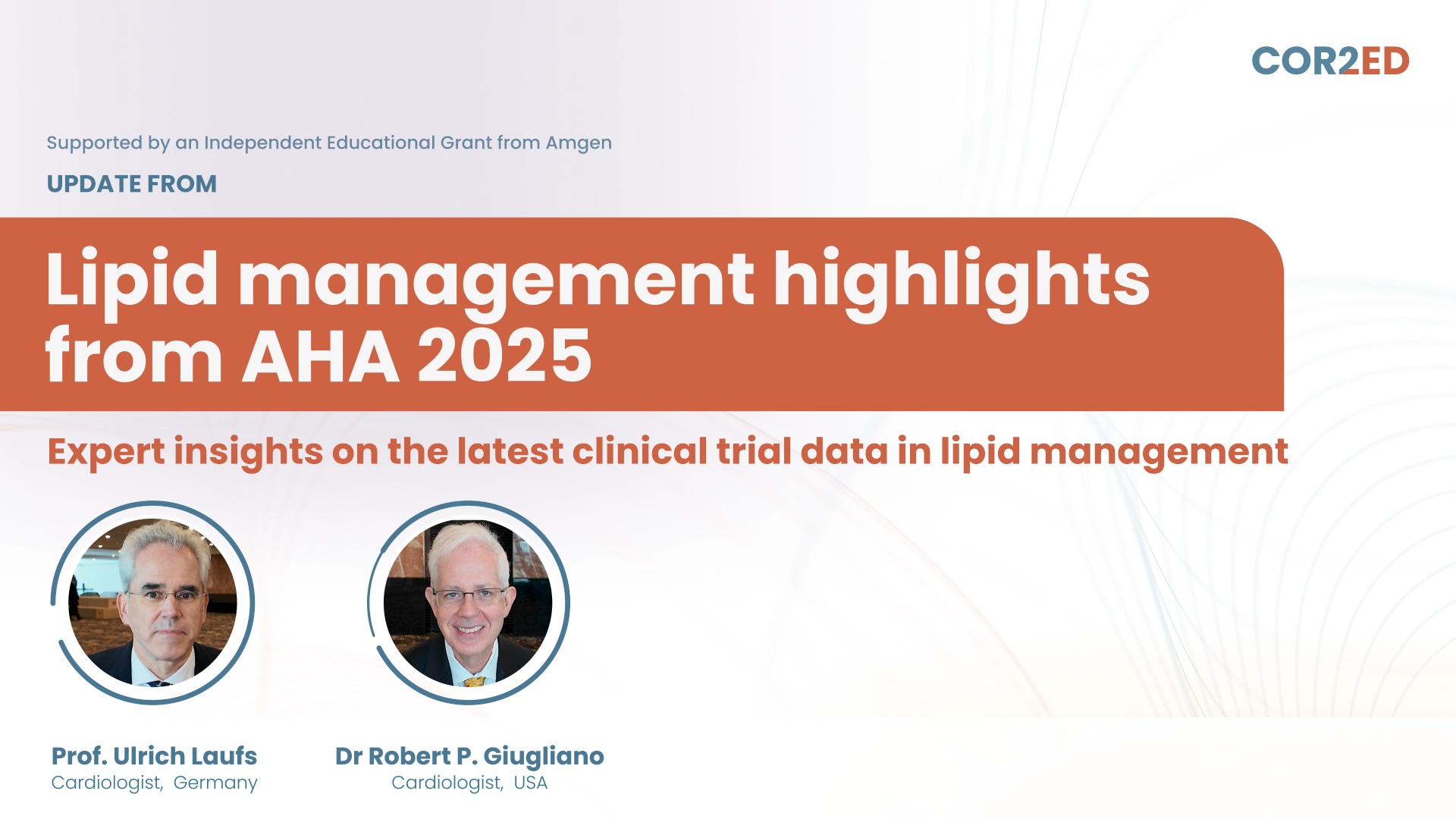
Lipid management highlights from AHA 2025

Expert insights on the latest clinical trial data in lipid management

Experts
Dr Robert P. Giugliano, Prof. Ulrich Laufs
Endorsed by
Ticino Cuore Foundation 
Parole & Réaction
  • clock 6 MIN
  • calendar Nov 2025
  • Non-accredited Independent Medical Education

Educational programme supported by an Independent Educational Grant from Amgen.
ipcv Interactive Patient Case Video (IPCV)

Episode

2

of 2

episode
Cardiology 
Heart failure management in the pre- and post-discharge setting: Case study 2

Optimising multiple drugs concurrently

Experts
Prof. Alexandre Mebazaa
  • clock 15 MIN
  • calendar Oct 2023
  • Non-accredited Independent Medical Education

This educational programme is supported by an Independent Educational Grant from Roche Diagnostics.