Watch the video and download the slides.


Highlights of 2021 in GU Oncology

GU CONNECT expert, Prof. David Pfister takes a look at the highlights of 2021 from GU CONNECT, in particular, the new trials and practice-changing developments in prostate, urothelial and kidney cancer.

For prostate cancer, the effects of 177Lu-PSMA in the VISION and TheraP trials are discussed as well as latest data from the STAMPEDE protocol and the results of the PEACE-1 trial. Prof. Pfister also discusses the EV-301 study for urothelial cancer and the KEYNOTE-564 trial in renal cell carcinoma patients.

Watch the video and download the slides.

Hello, my name is David Pfister. I'm a Urologist in the University Hospital of Cologne, Germany.

I'm here on behalf of the GU CONNECT Group to present the GU highlights of 2021.

Prostate Cancer

I just want to start with prostate cancer, and Professor Attard showed us another STAMPEDE analysis showing that the combination therapy of ADT radiotherapy and abiraterone acetate is significantly improved with regard to tumour response and overall survival compared to radiotherapy and androgen deprivation therapy alone. So this is one major point which will influence us in our future decision treatment finding. So we have another treatment option with an improved overall survival outcome.

The next trial, presented by Professor Fizazi, is the PEACE-1 trial. They are dealing with hormone-sensitive, initially metastasised prostate cancer, and they added to the standard of care from 2015, androgen deprivation therapy and a chemotherapy with docetaxel, again abiraterone acetate, and what the colleagues could highlight is that there is a significantly improved overall survival rate in the triple cocktail arm.

So again, we have here another trial showing us that intensified treatment in this cancer disease has an impact on overall survival.

In the different meetings we saw this year, the radionuclide therapy with PSMA-lutetium could demonstrate a significant improved tumour control and overall survival in patients in castrate-resistant disease.

We have the results from the TheraP trial, a phase two trial and from the VISION trial, a phase three trial first showing us that the tumour control and overall survival is significantly improved compared to cabazitaxel or standard of care in the VISION trial, but we could also see that the treatment is very well-tolerated and has significantly less negative side effects and is accompanied by a significantly improved quality of life.

Urothelial Cancer

The next tumour entity is urothelial cancer, and Professor Powles showed us the results from the EV-301 trial, highlighting that the enfortumab vedotin, compared to three different chemotherapy arms, has a significantly improved progression-free survival and overall survival rate.

The therapy, meanwhile, is FDA approved and at least in Europe and Germany, we have an early access programme in which we can implement patients after PD-L1 therapy, so we have a new treatment option in this very poor patient cohort, which has a clinical impact in this tumour stage.

Renal Cell Cancer

Finally, I want to finish with renal cell cancer. I just have to mention that with the CLEAR study, a phase 3 trial, we have another positive combination therapy with a PD-L1 antagonist and a TKI.

So, we have the fifth first-line treatment option in this patient cohort with metastases and actually to me, even more important is that we finally have a significant result in an adjuvant treatment in high-risk patients after nephrectomy and a high-risk for developing metastases, there we have the KEYNOTE-564 trial in which patients were offered pembrolizumab against surveillance and that we have a significantly improved tumour control with regard to progression-free survival. Right now, the data are still preliminary, so we have to wait till we have the overall survival dataset, but this is a very promising study, giving us the possibility to improve at least progression-free survival in this population cohort.

To me, these were the main points for the different tumour entities. I hope I could have caught your attention to these trials. Thank you very much.
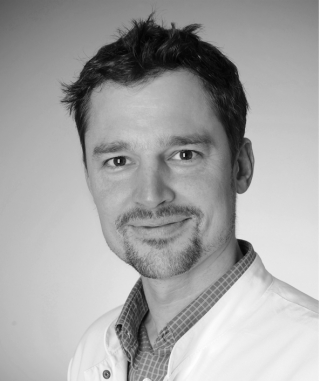
After finishing medical school in November 2004 Dr Pfister started his residency in the Department of Urology at the University of Cologne. For his endoscopic training, he switched to the General Hospital in Weiden (Oberpfalz/Bavaria) between August 2006 and March 2007. After returning to Cologne Dr Pfister heightened my oncologic education under Prof. Heidenreich. The oncologic training consisted of two arms: medical and surgical oncology. In 2009 his education was augmented at the University Hospital of Aachen. In 2010 he passed his urologic board exam. Since 2011 Dr Pfister has been working as a staff urologist with main interests in castration-resistant prostate cancer and testicular cancer. In 2011 he passed the Charles Huggins grant, an educational grant at the Center for Prostate Disease Research in Maryland, USA. In 2012 Dr Pfister received an additional qualification in the systemic treatment of solid tumours and since that time he has organised and led the urological clinical trial centre. In 2012 Dr Pfister qualified as a Professor and became an Associate Professor in November 2012 for medical oncologic treatment in urological tumours. At the end of 2015 he became the Commissionary Leader of the Urologic Department of the University of Aachen. Since 2016 Dr Pfister has become the Deputy Director of the Department of Urology, Uro-oncology and Robot-Assisted Surgery, University Hospital of Cologne. Special interest is castration-resistant, radiation-resistant prostate cancer and testicular cancer.

Prof. David Pfister has received financial support/sponsorship for research support, consultation, or speaker fees from the following companies:

AstraZeneca, Bayer, Merck, MSD, Janssen and Pfizer. 

Programme summary
Watch the video now
Share this programme
This educational programme is supported by an Independent Educational Grant from Bayer
Supporter Acknowledgement
This educational programme is supported by an Independent Educational Grant from Bayer
I agree that this educational programme:

Was valuable to me

1/4
Brought to you by
GU CONNECT

GU CONNECT is an initiative of COR2ED, supported by Independent Educational Grants from AstraZeneca, Bayer and Eisai Europe Limited.

Meet the experts Independent IME approved

Other programmes of interest

podcast Video podcast
Oncology 
Pre-analytical phase challenges and biomarker testing in HER2+ metastatic breast cancer

Experts
Dr Carlos Barrios, Prof. Gary Tse, Oncology Brothers (Moderators)
Endorsed by
Biomarker Collaborative
  • download Downloadable
    Resources
  • clock 23 MIN
  • calendar Mar 2026
  • Non-accredited Independent Medical Education

Educational programme supported by an Independent Educational Grant from Daiichi Sankyo 
eks
EKS / On-demand webinar
Oncology 
Multiple Myeloma: Is it time to rethink how we sequence treatments?

On-demand materials from an Experts Knowledge Share event

Experts
Prof. Karthik Ramasamy, Dr Joshua Richter, Dr Faisal Basheer, Dr Andrew Charlton
  • download Downloadable
    Resources
  • clock 80 MIN
  • calendar Mar 2026

This programme has been sponsored by Menarini Stemline and is intended for HCPs in the UK only    MAT-GB-SEL-00774
conference-update Conference update

Episode

2

of 2

episode
Oncology Rare diseases Endocrinology 
Actualités du Congrès l’ENETS 2026

Points de vue d’experts sur les dernières données concernant le cancer neuroendocrinien

Experts
Prof. Louis de Mestier, Prof. Timon Vandamme, Dr Alice Durand
  • clock 5 MIN
  • calendar Mar 2026
  • Non-accredited Independent Medical Education

Cette vidéo est soutenue par une subvention indépendante à visée éducative d’Ipsen.  Les contenus publiés sur ce site internet sont sous la responsabilité de leurs auteurs. Certaines données scientifiques publiées sur ce site sont susceptibles de ne pas être validées par la commission d’Autorisation de Mise sur le Marché, et ne doivent pas être mises en pratique. Elles doivent être lues et comprises avec le plus grand discernement et sont données dans leur cadre de la diffusion de l’information sur l’état actuel de la recherche auprès de la communauté scientifique internationale  
conference-update Conference update

Episode

1

of 2

episode
Oncology Rare diseases Endocrinology 
Update from ENETS 2026

Experts share their views on latest data in neuroendocrine cancer

Experts
Prof. Louis de Mestier, Prof. Timon Vandamme, Dr Alice Durand
  • clock 5 MIN
  • calendar Mar 2026
  • Non-accredited Independent Medical Education

This educational programme is supported by an Independent Educational Grant from Ipsen. The content published on this website is under the responsibility of its authors. Some scientific data published on this website may not have been validated by the relevant Marketing Authorisation Committees and should not be put into practice. It should be read and understood with the utmost discernment and is provided for the purpose of disseminating information on the current state of research to the international scientific community.
patient-support Patient Support
Oncology Hemato-oncology Pediatrics 
Personalised treatment in childhood cancer: A journey through NTRK fusion testing

Experts
Linet Menachery
Endorsed by
NTRKers ICAN international cancer advocacy network Biomarker Collaborative
  • clock 4 MIN
  • calendar Mar 2026
  • Non-accredited Independent Medical Education

Educational programme supported by an Independent Educational Grant from Bayer.