This video from Prof. Fernando Soares provides a practical, guideline-driven overview of HER2 immunohistochemistry (IHC) testing and scoring in endometrial, cervical, and ovarian cancers, detailing why accurate assessment is now critical for treatment selection.  


Key highlights include: 

  • When and why to test HER2 in gynecological cancers 
  • Practical guidance on HER2 IHC testing and treatment-based scoring  
  • Tumour-specific treatment implications according to HER2 status 
  • Review of HER2-targeted therapies 


Clinical takeaways

  • HER2 IHC testing is recommended in p53-aberrant endometrial cancer (EC), advanced or recurrent cervical cancer, and recurrent ovarian cancer, as HER2 status guides treatment selection. HER2 assessment and reporting should follow the CAP gynecologic reporting template
  • In EC, patients with HER2+ uterine serous carcinoma are eligible for 1st-line carboplatin–paclitaxel + trastuzumab. In this setting, HER2 positivity is defined as IHC 3+ (strong complete or basolateral/lateral membranous staining in >30% of tumour cells [TC]) or IHC 2+ (strong staining in ≤30% of TC, or weak-to-moderate staining in ≥10% of TC) with ISH+
  • In the recurrent or metastatic setting across endometrial, cervical, and ovarian cancers, patients with HER2-positive disease are eligible for ≥2nd-line treatment with T-DXd in certain circumstances. Here, HER2 positivity is defined as IHC 3+ (strong complete or basolateral/lateral staining in ≥10% of TC) or IHC 2+ (weak-to-moderate complete or basolateral/lateral staining in ≥10% of TC)
  • Standardisation across pre-analytic, analytic, and post-analytic phases is essential for reliable HER2 interpretation. In the absence of gynecological-specific guidance, established ASCO/CAP breast cancer standards can be applied

Provide expert opinion on HER2 immunohistochemistry in ovarian, cervical and endometrial cancers, focusing on best practices, which guidelines exist and scoring criteria to follow: 

  1. Understand best practices in HER2 immunohistochemistry 
  2. Be able to implement optimal immunohistochemistry testing and scoring of staining for HER2 expression 
  3. Recognise the appropriate placement of therapies targeting HER2 alterations (including ADCs) across the patient journey  

Dr Fernando Soares is Full Professor at University of São Paulo, and Head of the Department of Anatomic Pathology of Rede D’Or. Dr Soares’s main research expertise is in translational pathology with emphasis in predictive markers and biomarkers in diagnosis and prognosis of the tumors. He was a senior investigator in several grants, which have resulted in more than 600 peer-reviewed scientific papers, 500 in international journals. He has supervised more than 100 MSC/PhD students. Dr. Soares is Editor-in-chief of the Surgical and Experimental Pathology, former President of the Brazilian Society of Pathology (1997-2001), former President of the Latin American Society of Pathology (2009-2011), and former member of the Standing Committee for Tumor classification of the World Health Organization.  

Prof. Fernando A. Soares has received financial support/sponsorship for research support, consultation, or speaker fees from the following companies:

Served as a consultant, participated in advisory boards, and/or received honoraria from: AstraZeneca, Daiichi Sankyo, Roche Diagnostics, Roche Pharma, Novartis, MSD, Pfizer, Dako-Agilent, Astellas, Amgen, BMS, and AbbVie.

This video from Prof. Fernando Soares provides a practical, guideline-driven overview of HER2 immunohistochemistry (IHC) testing and scoring in endometrial, cervical, and ovarian cancers, detailing why accurate assessment is now critical for treatment selection.  


Key highlights include: 

  • When and why to test HER2 in gynecological cancers 
  • Practical guidance on HER2 IHC testing and treatment-based scoring  
  • Tumour-specific treatment implications according to HER2 status 
  • Review of HER2-targeted therapies 


Clinical takeaways

  • HER2 IHC testing is recommended in p53-aberrant endometrial cancer (EC), advanced or recurrent cervical cancer, and recurrent ovarian cancer, as HER2 status guides treatment selection. HER2 assessment and reporting should follow the CAP gynecologic reporting template
  • In EC, patients with HER2+ uterine serous carcinoma are eligible for 1st-line carboplatin–paclitaxel + trastuzumab. In this setting, HER2 positivity is defined as IHC 3+ (strong complete or basolateral/lateral membranous staining in >30% of tumour cells [TC]) or IHC 2+ (strong staining in ≤30% of TC, or weak-to-moderate staining in ≥10% of TC) with ISH+
  • In the recurrent or metastatic setting across endometrial, cervical, and ovarian cancers, patients with HER2-positive disease are eligible for ≥2nd-line treatment with T-DXd in certain circumstances. Here, HER2 positivity is defined as IHC 3+ (strong complete or basolateral/lateral staining in ≥10% of TC) or IHC 2+ (weak-to-moderate complete or basolateral/lateral staining in ≥10% of TC)
  • Standardisation across pre-analytic, analytic, and post-analytic phases is essential for reliable HER2 interpretation. In the absence of gynecological-specific guidance, established ASCO/CAP breast cancer standards can be applied

Provide expert opinion on HER2 immunohistochemistry in ovarian, cervical and endometrial cancers, focusing on best practices, which guidelines exist and scoring criteria to follow: 

  1. Understand best practices in HER2 immunohistochemistry 
  2. Be able to implement optimal immunohistochemistry testing and scoring of staining for HER2 expression 
  3. Recognise the appropriate placement of therapies targeting HER2 alterations (including ADCs) across the patient journey  

Dr Fernando Soares is Full Professor at University of São Paulo, and Head of the Department of Anatomic Pathology of Rede D’Or. Dr Soares’s main research expertise is in translational pathology with emphasis in predictive markers and biomarkers in diagnosis and prognosis of the tumors. He was a senior investigator in several grants, which have resulted in more than 600 peer-reviewed scientific papers, 500 in international journals. He has supervised more than 100 MSC/PhD students. Dr. Soares is Editor-in-chief of the Surgical and Experimental Pathology, former President of the Brazilian Society of Pathology (1997-2001), former President of the Latin American Society of Pathology (2009-2011), and former member of the Standing Committee for Tumor classification of the World Health Organization.  

Prof. Fernando A. Soares has received financial support/sponsorship for research support, consultation, or speaker fees from the following companies:

Served as a consultant, participated in advisory boards, and/or received honoraria from: AstraZeneca, Daiichi Sankyo, Roche Diagnostics, Roche Pharma, Novartis, MSD, Pfizer, Dako-Agilent, Astellas, Amgen, BMS, and AbbVie.

Programme summary
Watch the video now
Share this programme
This educational programme is supported by an Independent Educational Grant from Daiichi Sankyo.
Supporter Acknowledgement
This educational programme is supported by an Independent Educational Grant from Daiichi Sankyo.
Endorsement
I agree that this educational programme:

Was valuable to me

1/4
Brought to you by
PRECISION ONCOLOGY CONNECT

PRECISION ONCOLOGY CONNECT is an initiative of COR2ED, supported by Independent Educational Grants from AstraZeneca, Amoy Diagnostics, Bayer, Pierre Fabre Laboratories, Thermo Fisher Scientific and Daiichi Sankyo.

Meet the experts
Brought to you by
OBSTETRICS & GYNECOLOGY CONNECT 

OBSTETRICS & GYNECOLOGY CONNECT is an initiative of COR2ED, supported by Independent Educational Grants from Eisai Europe Ltd, Aspivix and Novo Nordisk.

Meet the experts Independent IME approved
Programme summary
Share this programme
This educational programme is supported by an Independent Educational Grant from Daiichi Sankyo.
Supporter Acknowledgement
This educational programme is supported by an Independent Educational Grant from Daiichi Sankyo.
Endorsement
I agree that this educational programme:

Was valuable to me

1/4
Brought to you by
PRECISION ONCOLOGY CONNECT

PRECISION ONCOLOGY CONNECT is an initiative of COR2ED, supported by Independent Educational Grants from AstraZeneca, Amoy Diagnostics, Bayer, Pierre Fabre Laboratories, Thermo Fisher Scientific and Daiichi Sankyo.

Meet the experts
Brought to you by
OBSTETRICS & GYNECOLOGY CONNECT 

OBSTETRICS & GYNECOLOGY CONNECT is an initiative of COR2ED, supported by Independent Educational Grants from Eisai Europe Ltd, Aspivix and Novo Nordisk.

Meet the experts Independent IME approved

Other programmes of interest

conference-update Conference update
Oncology 
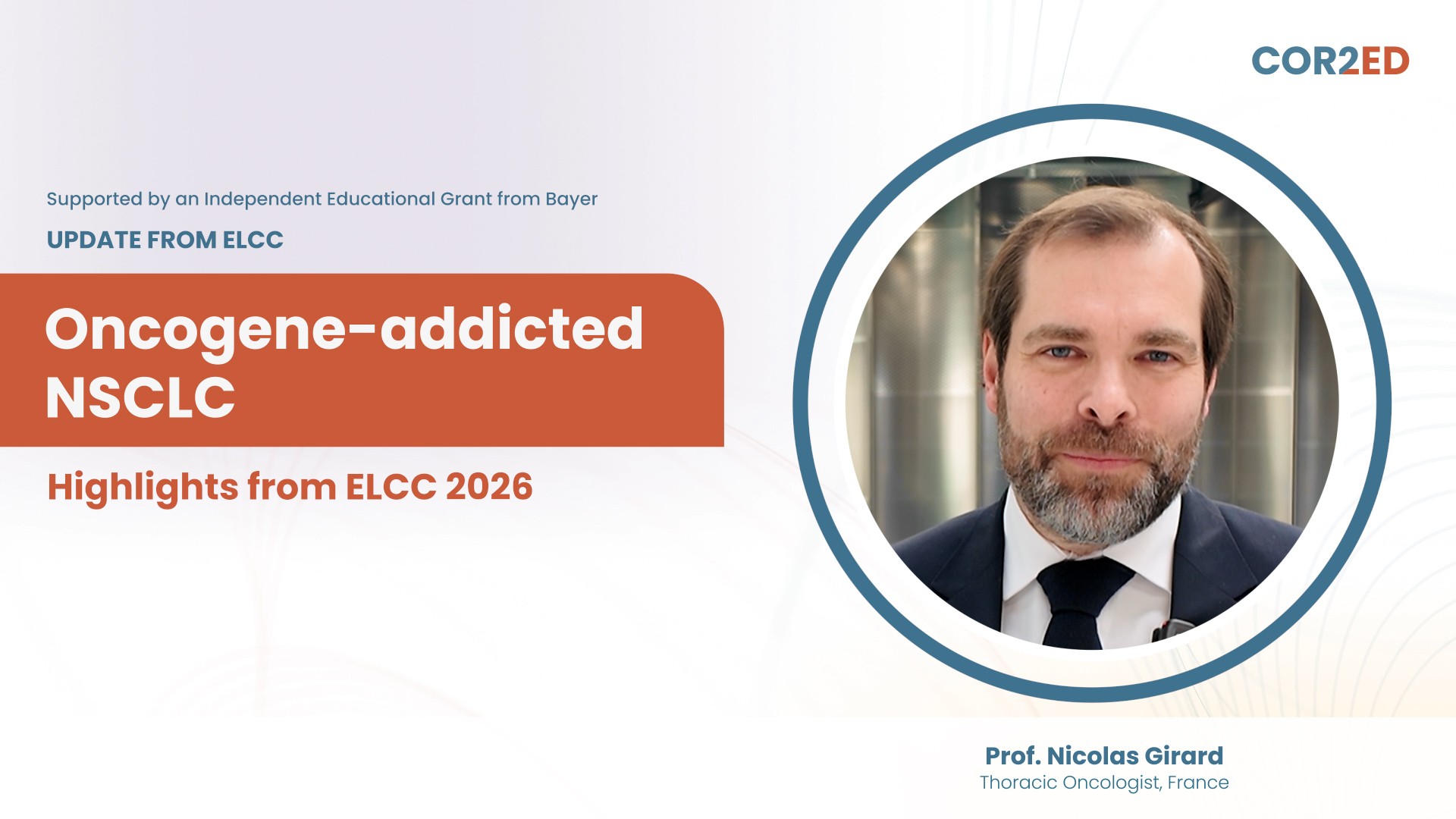
Coming soon! Oncogene-addicted NSCLC highlights from ELCC 2026

Expert insights on the latest NSCLC data

Experts
Prof. Nicolas Girard
Endorsed by
ICAN international cancer advocacy network Biomarker Collaborative Exon20group
ISLB Lung Cancer Europe
  • clock 1 MIN
  • calendar Mar 2026
  • Non-accredited Independent Medical Education

Educational programme supported by an Independent Educational Grant from Bayer.
podcast Video podcast
Oncology 
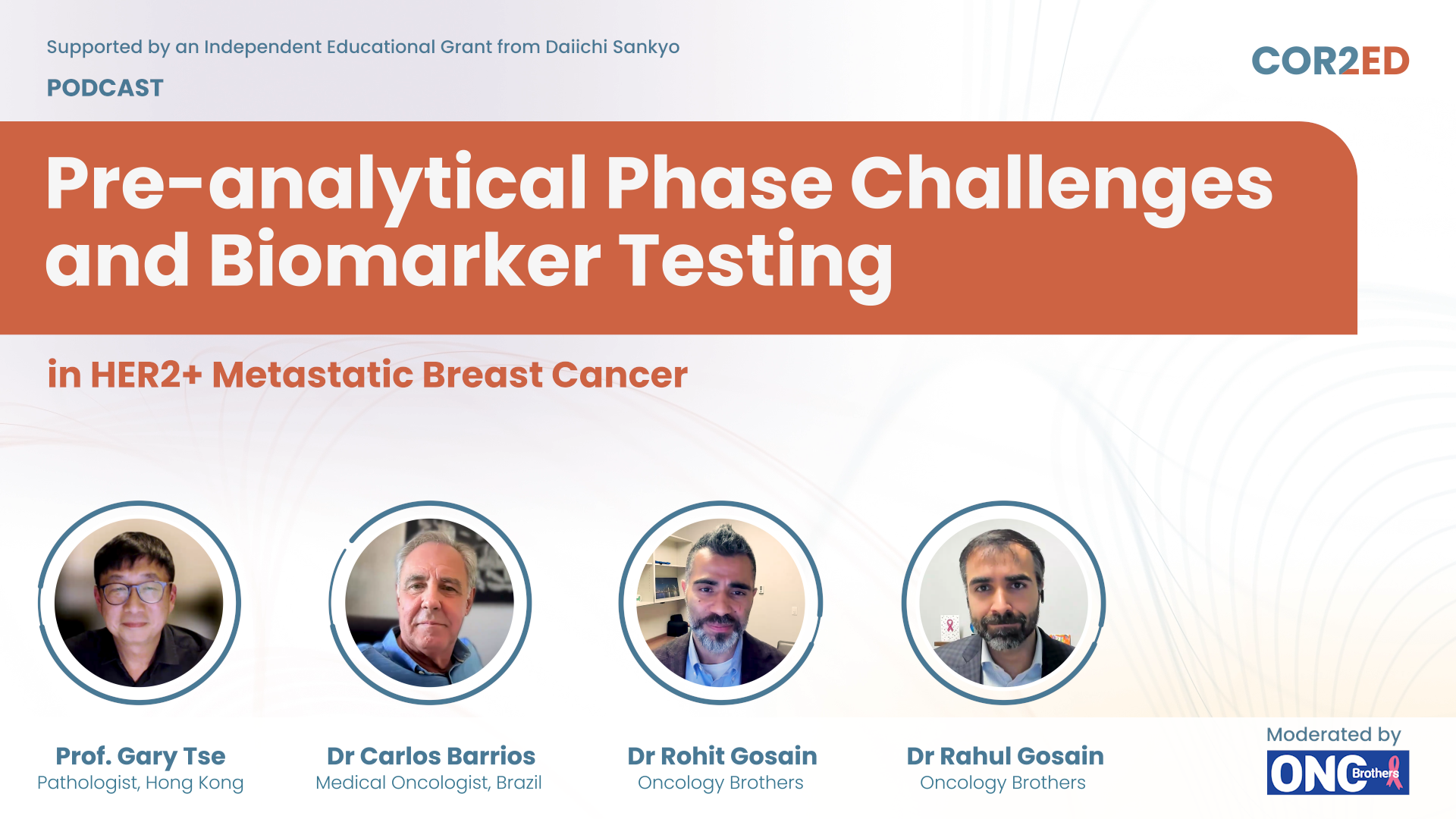
Pre-analytical phase challenges and biomarker testing in HER2+ metastatic breast cancer

Experts
Dr Carlos Barrios, Prof. Gary Tse, Oncology Brothers (Moderators)
Endorsed by
Biomarker Collaborative
  • download Downloadable
    Resources
  • clock 23 MIN
  • calendar Mar 2026
  • Non-accredited Independent Medical Education

Educational programme supported by an Independent Educational Grant from Daiichi Sankyo 
eks
EKS / On-demand webinar
Oncology 
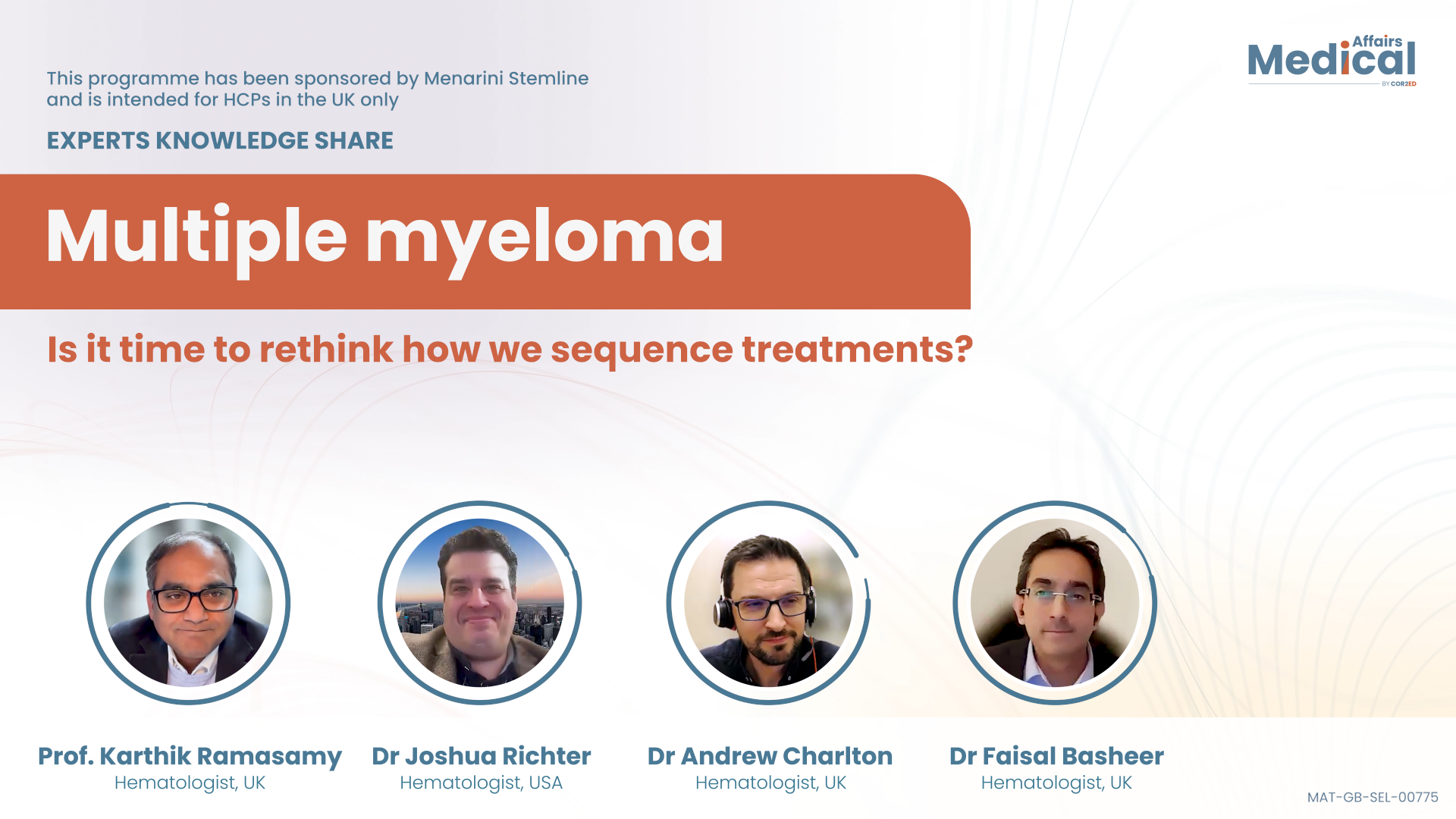
Multiple Myeloma: Is it time to rethink how we sequence treatments?

On-demand materials from an Experts Knowledge Share event

Experts
Prof. Karthik Ramasamy, Dr Joshua Richter, Dr Faisal Basheer, Dr Andrew Charlton
  • download Downloadable
    Resources
  • clock 80 MIN
  • calendar Mar 2026

This programme has been sponsored by Menarini Stemline and is intended for HCPs in the UK only    MAT-GB-SEL-00774
conference-update Conference update

Episode

2

of 2

episode
Oncology Rare diseases Endocrinology 
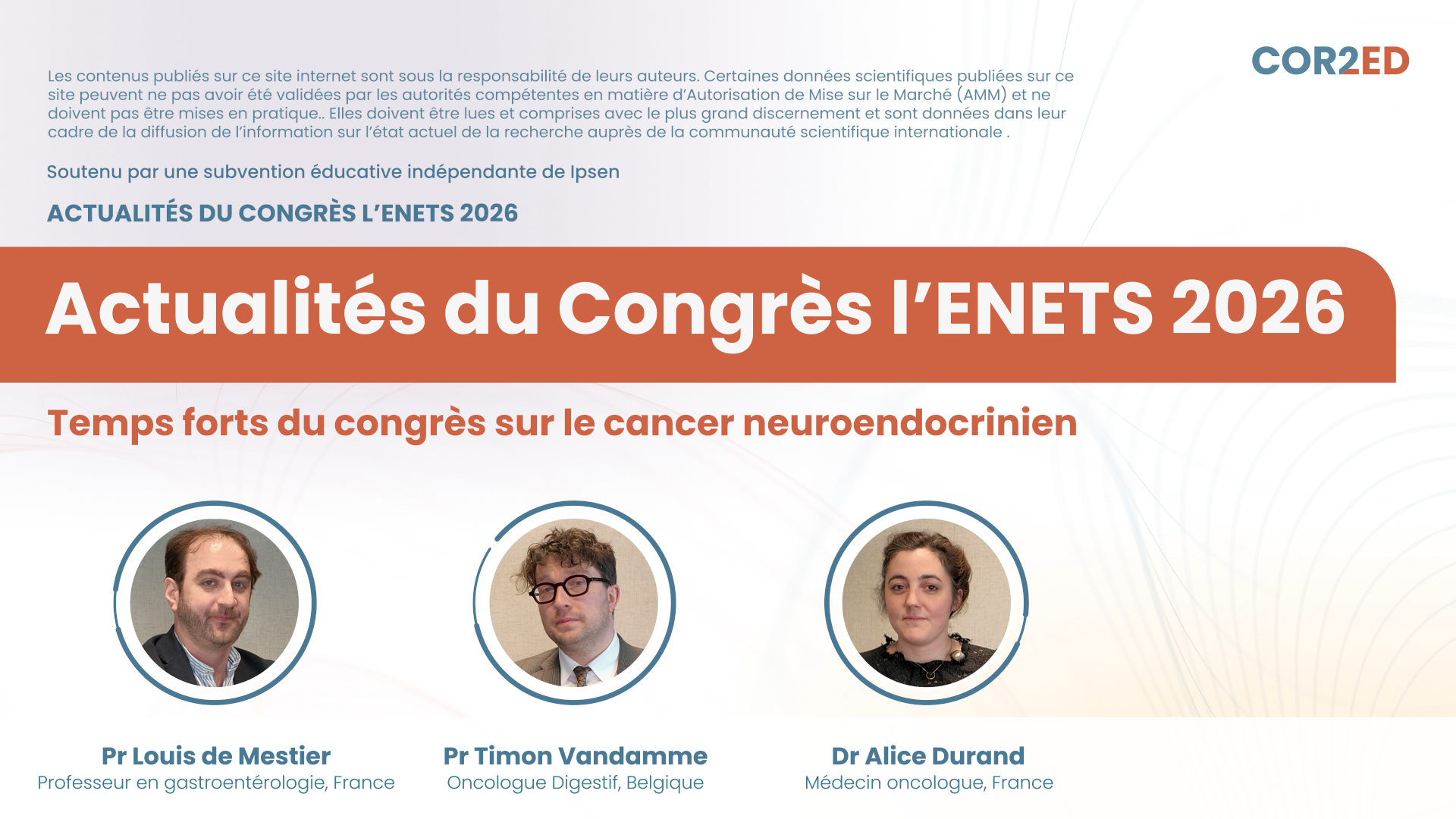
Actualités du Congrès l’ENETS 2026

Points de vue d’experts sur les dernières données concernant le cancer neuroendocrinien

Experts
Prof. Louis de Mestier, Prof. Timon Vandamme, Dr Alice Durand
  • clock 5 MIN
  • calendar Mar 2026
  • Non-accredited Independent Medical Education

Cette vidéo est soutenue par une subvention indépendante à visée éducative d’Ipsen.  Les contenus publiés sur ce site internet sont sous la responsabilité de leurs auteurs. Certaines données scientifiques publiées sur ce site sont susceptibles de ne pas être validées par la commission d’Autorisation de Mise sur le Marché, et ne doivent pas être mises en pratique. Elles doivent être lues et comprises avec le plus grand discernement et sont données dans leur cadre de la diffusion de l’information sur l’état actuel de la recherche auprès de la communauté scientifique internationale  
conference-update Conference update

Episode

1

of 2

episode
Oncology Rare diseases Endocrinology 
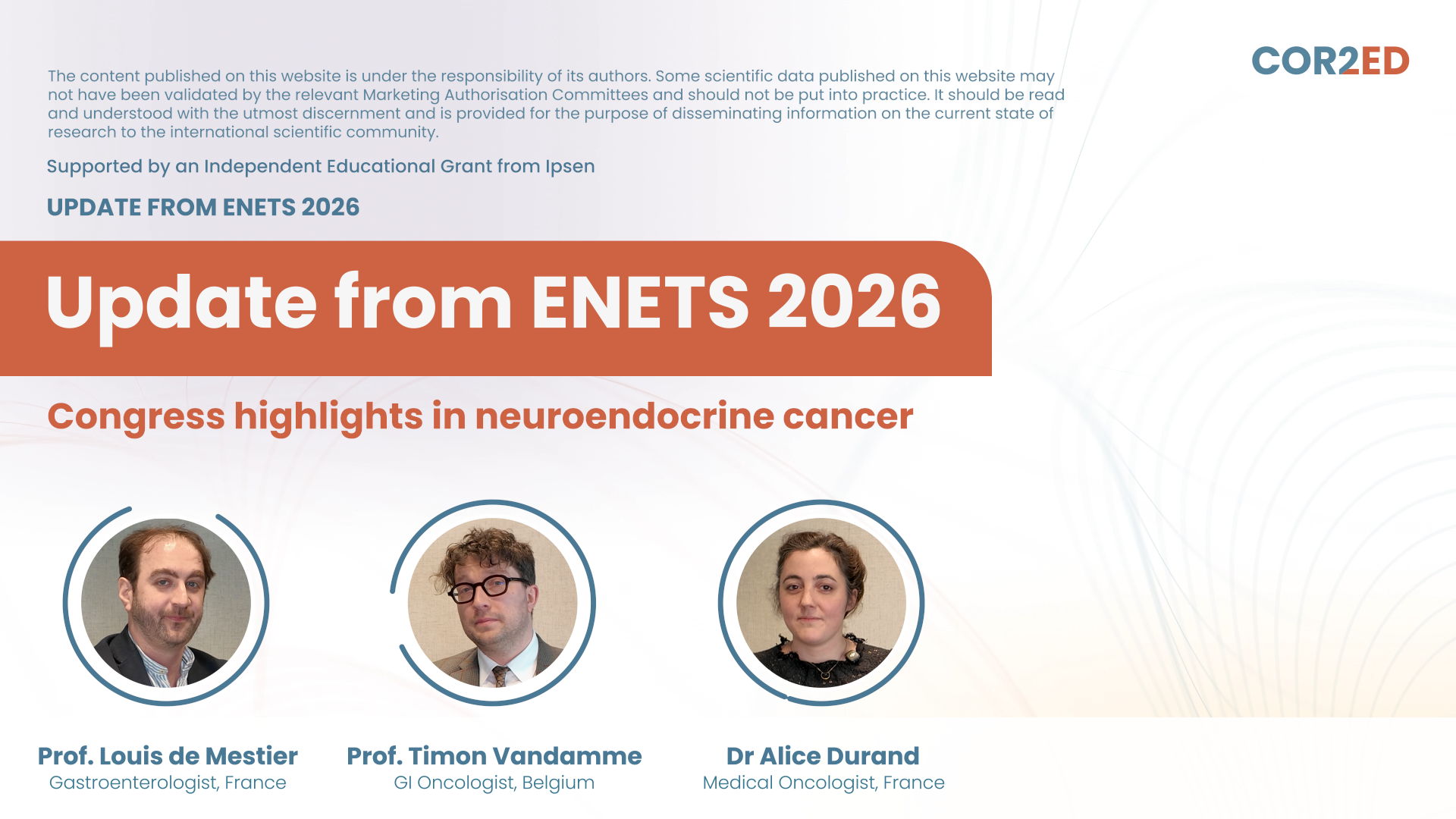
Update from ENETS 2026

Experts share their views on latest data in neuroendocrine cancer

Experts
Prof. Louis de Mestier, Prof. Timon Vandamme, Dr Alice Durand
  • clock 5 MIN
  • calendar Mar 2026
  • Non-accredited Independent Medical Education

This educational programme is supported by an Independent Educational Grant from Ipsen. The content published on this website is under the responsibility of its authors. Some scientific data published on this website may not have been validated by the relevant Marketing Authorisation Committees and should not be put into practice. It should be read and understood with the utmost discernment and is provided for the purpose of disseminating information on the current state of research to the international scientific community.
patient-support Patient Support
Oncology Hemato-oncology Pediatrics 
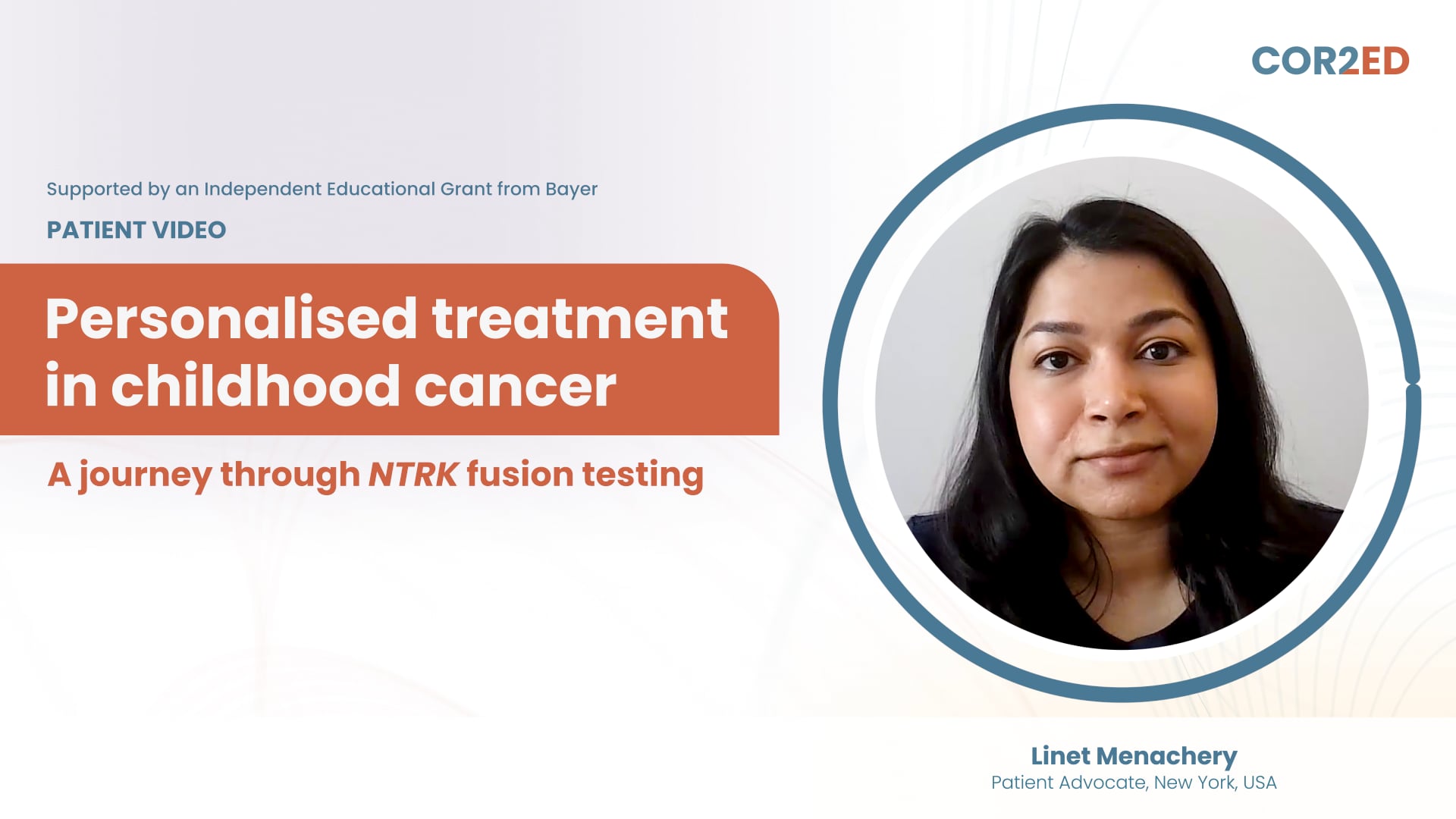
Personalised treatment in childhood cancer: A journey through NTRK fusion testing

Experts
Linet Menachery
Endorsed by
NTRKers ICAN international cancer advocacy network Biomarker Collaborative
  • clock 4 MIN
  • calendar Mar 2026
  • Non-accredited Independent Medical Education

Educational programme supported by an Independent Educational Grant from Bayer.