In this micro learning programme, you'll learn about PARP inhibitors in prostate cancer from medical experts Assoc. Prof. Alicia Morgans and Dr Pasquale Rescigno.

Learning resources include videos, slides, flashcards and assessments. Complete both modules to earn your CME credit.

What you'll learn


Clinical takeaways:

  • PARP inhibitors are effective drugs as monotherapy in mCRPC patients with HRR alterations
  • Genetic testing is important to help with treatment decision-making and for understanding inherited risk
  • BRCA mutations are associated with poor outcomes in mCRPC patients
  • Patients with tumours harbouring BRCA1/BRCA2 alterations appear to derive the greatest clinical benefit from PARPi, but patients with other HRR alterations also derive benefit
  • PARP inhibitors combined with novel hormonal agents are effective as a first-line treatment option for mCRPC patients with an HRR mutation. Certain combinations, such as olaparib plus abiraterone and talazoparib plus enzalutamide, have also shown benefits in patients regardless of their HRR status
  • Recognise the efficacy and safety profiles of PARP inhibitors (monotherapy trials)
  • Know their differences across tumour types
  • Understand their place in the treatment landscape for patients with prostate cancer
  • Understand the role of genetic testing

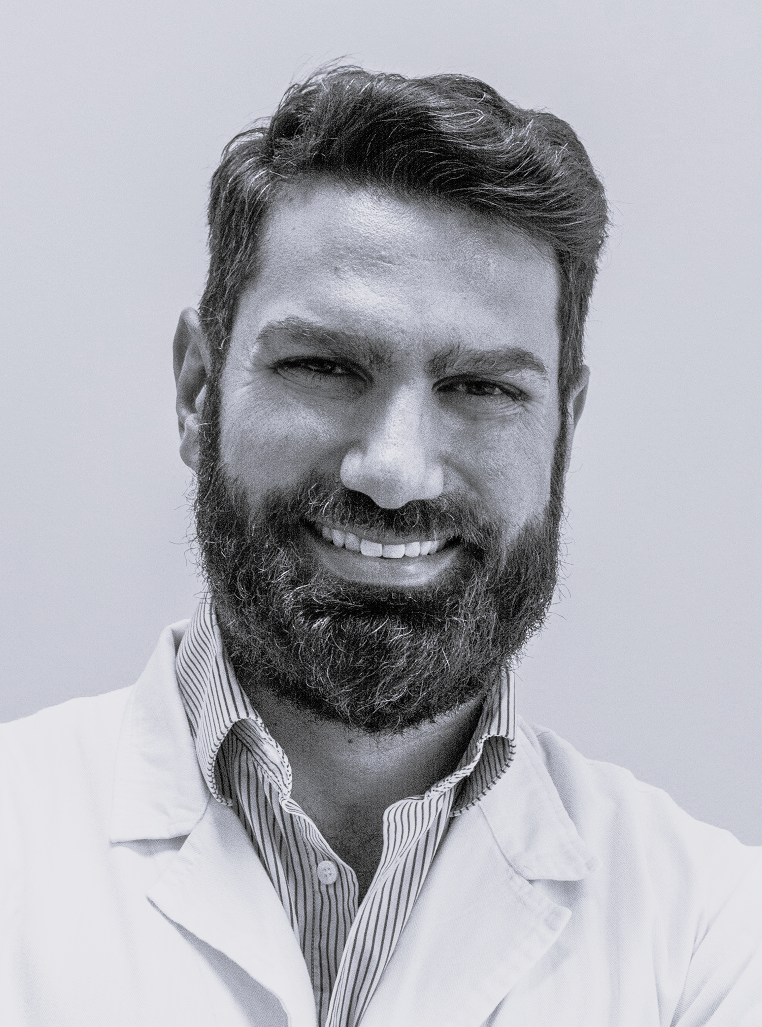
Dr Morgans is Genitourinary Medical Oncologist at Dana-Farber Cancer Institute, and Faculty in Medicine at Harvard Medical School in Boston, MA. She completed medical school and residency at the University of Pennsylvania School of Medicine, fellowship in Hematology/Oncology at Harvard’s Dana Farber Cancer Institute and Massachusetts General Hospital Cancer Center in Boston and earned a Master of Public Health at Vanderbilt University. Dr Morgans treats patients with prostate, bladder, and testicular cancer, and her research assesses complications of advanced prostate cancer survivorship and patient-centered treatment decision-making in advanced prostate cancer.

Assoc. Prof. Alicia Morgans has received financial support/sponsorship for research support, consultation, or speaker fees from the following companies:

AAA, Astellas, AstraZeneca, Bayer, Exelixis, Janssen, Myovant, Novartis, Pfizer, Sanofi and Telix. 

Dr Pasquale Rescigno is Clinical Senior Lecturer at the Translational and Clinical Research Institute at Newcastle University, UK. He is the former Head of the Translational and Clinical Trial Team on GU Cancers at the Istituto di Candiolo FPO-IRCCS (Candiolo Cancer Institute), Clinical Research Fellow at the Institute of Cancer Research (London), and Prostate Cancer Foundation Young Investigator awardee.  

His research mainly focuses on the study of mechanisms/pathways that are disrupted in prostate cancer (such as PTEN/PI3K/AKT, TP53 and RB1), and on the identification and validation of predictive, prognostic and efficacy-response biomarkers for novel agents targeting the PI3K/AKT, DNA repair systems and the PD-1/PDL-1 pathways.

He has served as Principal and Sub-investigator of several phase I/II/III Clinical Trials and designed and is the Clinical Coordinator and Principal Investigator of UK and Italian national research projects (MAESTRO, an umbrella trial and PERSEUS1 in the UK; BITCOIN and BRIDGE in Italy).

More recently, his research activity focused on the study of gut microbiome in prostate cancer.

In this micro learning programme, you'll learn about PARP inhibitors in prostate cancer from medical experts Assoc. Prof. Alicia Morgans and Dr Pasquale Rescigno.

Learning resources include videos, slides, flashcards and assessments. Complete both modules to earn your CME credit.

What you'll learn


Clinical takeaways:

  • PARP inhibitors are effective drugs as monotherapy in mCRPC patients with HRR alterations
  • Genetic testing is important to help with treatment decision-making and for understanding inherited risk
  • BRCA mutations are associated with poor outcomes in mCRPC patients
  • Patients with tumours harbouring BRCA1/BRCA2 alterations appear to derive the greatest clinical benefit from PARPi, but patients with other HRR alterations also derive benefit
  • PARP inhibitors combined with novel hormonal agents are effective as a first-line treatment option for mCRPC patients with an HRR mutation. Certain combinations, such as olaparib plus abiraterone and talazoparib plus enzalutamide, have also shown benefits in patients regardless of their HRR status
  • Recognise the efficacy and safety profiles of PARP inhibitors (monotherapy trials)
  • Know their differences across tumour types
  • Understand their place in the treatment landscape for patients with prostate cancer
  • Understand the role of genetic testing

Dr Morgans is Genitourinary Medical Oncologist at Dana-Farber Cancer Institute, and Faculty in Medicine at Harvard Medical School in Boston, MA. She completed medical school and residency at the University of Pennsylvania School of Medicine, fellowship in Hematology/Oncology at Harvard’s Dana Farber Cancer Institute and Massachusetts General Hospital Cancer Center in Boston and earned a Master of Public Health at Vanderbilt University. Dr Morgans treats patients with prostate, bladder, and testicular cancer, and her research assesses complications of advanced prostate cancer survivorship and patient-centered treatment decision-making in advanced prostate cancer.

Assoc. Prof. Alicia Morgans has received financial support/sponsorship for research support, consultation, or speaker fees from the following companies:

AAA, Astellas, AstraZeneca, Bayer, Exelixis, Janssen, Myovant, Novartis, Pfizer, Sanofi and Telix. 

Dr Pasquale Rescigno is Clinical Senior Lecturer at the Translational and Clinical Research Institute at Newcastle University, UK. He is the former Head of the Translational and Clinical Trial Team on GU Cancers at the Istituto di Candiolo FPO-IRCCS (Candiolo Cancer Institute), Clinical Research Fellow at the Institute of Cancer Research (London), and Prostate Cancer Foundation Young Investigator awardee.  

His research mainly focuses on the study of mechanisms/pathways that are disrupted in prostate cancer (such as PTEN/PI3K/AKT, TP53 and RB1), and on the identification and validation of predictive, prognostic and efficacy-response biomarkers for novel agents targeting the PI3K/AKT, DNA repair systems and the PD-1/PDL-1 pathways.

He has served as Principal and Sub-investigator of several phase I/II/III Clinical Trials and designed and is the Clinical Coordinator and Principal Investigator of UK and Italian national research projects (MAESTRO, an umbrella trial and PERSEUS1 in the UK; BITCOIN and BRIDGE in Italy).

More recently, his research activity focused on the study of gut microbiome in prostate cancer.
Programme summary
Take the micro learning now
Other episodes of this series
PARP inhibitors in prostate cancer and the rationale behind combination treatment

PARP inhibitors in prostate cancer and the rationale behind combination treatment

Module 1 - PARP inhibitors in advanced prostate cancer

Current Module
PARP inhibitors in prostate cancer and the rationale behind combination treatment

PARP inhibitors in prostate cancer and the rationale behind combination treatment

Module 2 - Evolving landscape of PARPi in mCRPC: Combination with anti-androgens

Share this programme
This educational programme is supported by an Independent Educational Grant from AstraZeneca
Supporter Acknowledgement
This educational programme is supported by an Independent Educational Grant from AstraZeneca
Endorsement
I agree that this educational programme:

Was valuable to me

1/4
Brought to you by
GU CONNECT

GU CONNECT is an initiative of COR2ED, supported by Independent Educational Grants from AstraZeneca, Bayer and Eisai Europe Limited.

Meet the experts Independent IME approved
Programme summary
  • clock Duration MIN
  • clock Language(s) flag
Other episodes of this series
PARP inhibitors in prostate cancer and the rationale behind combination treatment

PARP inhibitors in prostate cancer and the rationale behind combination treatment

Module 1 - PARP inhibitors in advanced prostate cancer

Current Module
PARP inhibitors in prostate cancer and the rationale behind combination treatment

PARP inhibitors in prostate cancer and the rationale behind combination treatment

Module 2 - Evolving landscape of PARPi in mCRPC: Combination with anti-androgens

Share this programme
This educational programme is supported by an Independent Educational Grant from AstraZeneca
Supporter Acknowledgement
This educational programme is supported by an Independent Educational Grant from AstraZeneca
Endorsement
I agree that this educational programme:

Was valuable to me

1/4
Brought to you by
GU CONNECT

GU CONNECT is an initiative of COR2ED, supported by Independent Educational Grants from AstraZeneca, Bayer and Eisai Europe Limited.

Meet the experts Independent IME approved

Other programmes of interest

eks
EKS / On-demand webinar
Oncology 
Multiple Myeloma: Is it time to rethink how we sequence treatments?

On-demand materials from an Experts Knowledge Share event

Experts
Prof. Karthik Ramasamy, Dr Joshua Richter, Dr Faisal Basheer, Dr Andrew Charlton
  • download Downloadable
    Resources
  • clock 80 MIN
  • calendar Mar 2026

This programme has been sponsored by Menarini Stemline and is intended for HCPs in the UK only    MAT-GB-SEL-00774
conference-update Conference update

Episode

2

of 2

episode
Oncology Rare diseases Endocrinology 
Actualités du Congrès l’ENETS 2026

Points de vue d’experts sur les dernières données concernant le cancer neuroendocrinien

Experts
Prof. Louis de Mestier, Prof. Timon Vandamme, Dr Alice Durand
  • clock 5 MIN
  • calendar Mar 2026
  • Non-accredited Independent Medical Education

Cette vidéo est soutenue par une subvention indépendante à visée éducative d’Ipsen.  Les contenus publiés sur ce site internet sont sous la responsabilité de leurs auteurs. Certaines données scientifiques publiées sur ce site sont susceptibles de ne pas être validées par la commission d’Autorisation de Mise sur le Marché, et ne doivent pas être mises en pratique. Elles doivent être lues et comprises avec le plus grand discernement et sont données dans leur cadre de la diffusion de l’information sur l’état actuel de la recherche auprès de la communauté scientifique internationale  
conference-update Conference update

Episode

1

of 2

episode
Oncology Rare diseases Endocrinology 
Update from ENETS 2026

Experts share their views on latest data in neuroendocrine cancer

Experts
Prof. Louis de Mestier, Prof. Timon Vandamme, Dr Alice Durand
  • clock 5 MIN
  • calendar Mar 2026
  • Non-accredited Independent Medical Education

This educational programme is supported by an Independent Educational Grant from Ipsen. The content published on this website is under the responsibility of its authors. Some scientific data published on this website may not have been validated by the relevant Marketing Authorisation Committees and should not be put into practice. It should be read and understood with the utmost discernment and is provided for the purpose of disseminating information on the current state of research to the international scientific community.
conference-update Conference update
Oncology 
Update from ESGO 2026 – PYNNACLE Phase 2 study: Interim results from the ovarian cancer cohort

Clinical insights and expert discussion

Experts
Prof. Domenica Lorusso, Prof. Jean-Sebastien Frenel
  • download Downloadable
    Resources
  • clock 5 MIN
  • calendar Mar 2026

This programme has been sponsored by PMV Pharma and is intended for HCPs only.
publication Scientific Publication
Oncology 
ADCs in HER2+ metastatic breast cancer and management of adverse events

Consensus-based guidance for clinicians and patients

Experts
Prof. Javier Cortés, Prof. Giuseppe Curigliano, Prof. Shaheenah Dawood, Dr Grażyna Suchodolska, Dr Sara Tolaney, Carla Whitbread
Endorsed by
EONS - European Oncology Nursing Society Europa Donna
  • download Downloadable
    Resources
  • clock 20 MIN
  • calendar Feb 2026
  • Non-accredited Independent Medical Education

Educational programme supported by an Independent Educational Grant from AstraZeneca