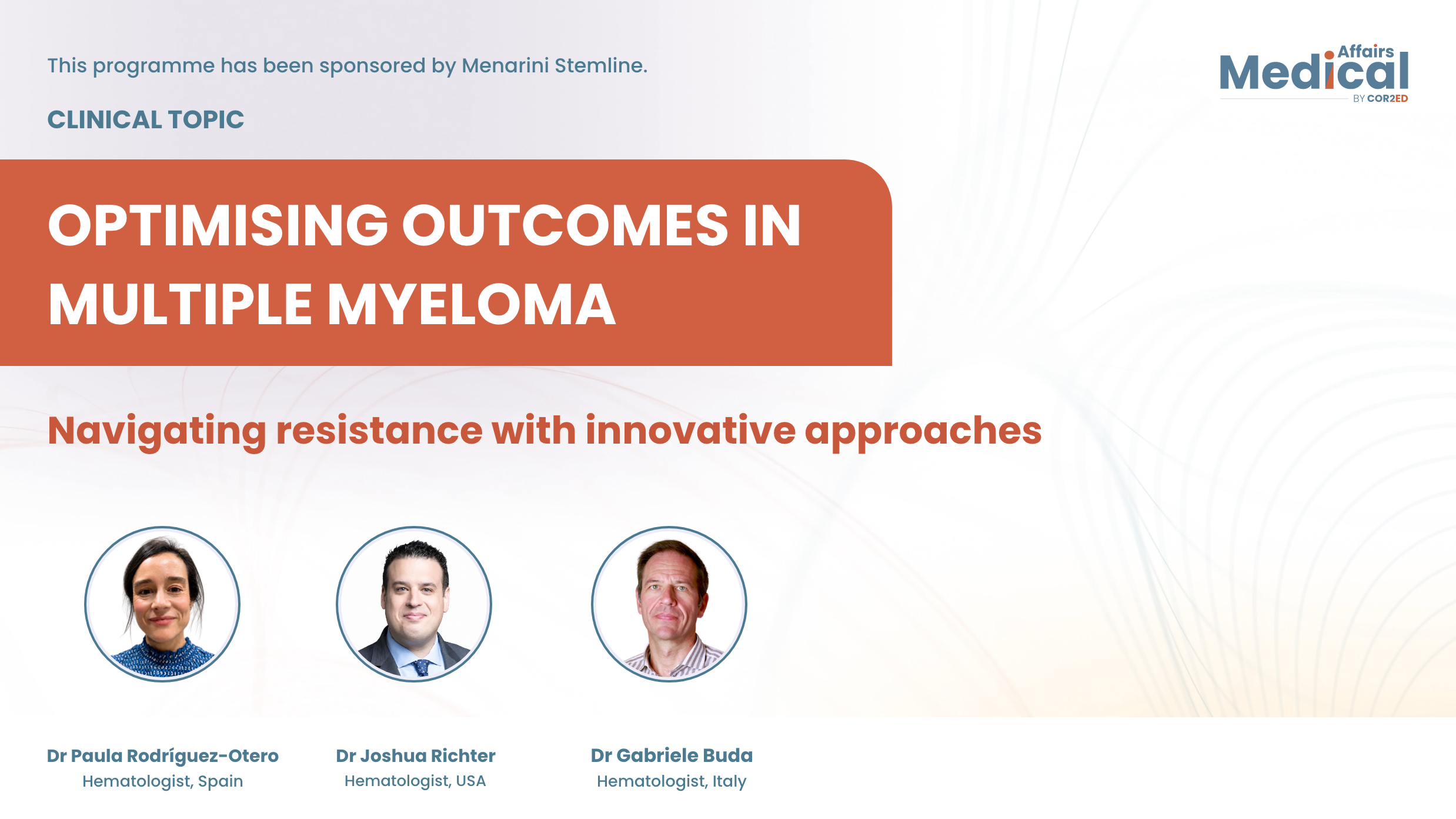

Myelofibrosis (MF) care is shifting from symptom management to personalised disease modification. Profs. Francesco Passamonti and Claire Harrison share an update on unmet needs and review EHA 2026 trial data to provide an evidence-based update for multidisciplinary hematology-oncology teams.


Key topics include: 

  • Beyond the spleen: Disease modification requires measuring therapeutic success through genomic profiles and biological markers rather than spleen and symptom control alone
  • EHA phase 3 data: Outcomes from SENTRY (selinexor + ruxolitinib) and INDEPENDENCE (luspatercept), plus updates on pelabresib and momelotinib 
  • EHA early-phase insights: Novel mechanisms addressing treatment resistance, including early-phase data on INCA033989 and AJ1-11095


Clinical takeaways

  • Beyond Symptom Control: Current treatments leave significant gaps; novel approaches must move beyond symptom control to alter the underlying disease course
  • Genomic Profiles Enhance Prognosis: Adding mutational data to established clinical parameters could provide a useful layer of insight for guiding risk-adapted care
  • VAF and Biomarkers Indicate Response: Reducing VAF appears to be a strong marker of disease modification, while biological markers (cytokines, blasts, and BMF) often correlate closely with treatment outcomes
  • Combinations Hold Future Potential: Emerging combination therapies could reshape MF management by targeting multiple disease pathways, improving outcomes

To understand:

  • Identify current unmet clinical needs in the treatment of myelofibrosis
  • Evaluate how genomic profiling enhances clinical models to guide risk-adapted care
  • Assess the role of VAF reduction, cytokines, blasts, and BMF in tracking disease modification
  • Explore how emerging combination therapies aim to prolong survival beyond basic symptom control

Prof. Francesco Passamonti has received financial support/sponsorship for research support, consultation, or speaker fees from the following companies:

AbbVie, Bristol Myers Squibb/Celgene, GSK, Keros, Menarini Stemline, Novartis, Sumitomo, AOP Orphan, Bristol Myers Squibb, Jazz

Myelofibrosis (MF) care is shifting from symptom management to personalised disease modification. In this programme, Profs. Francesco Passamonti and Claire Harrison share an update on unmet needs and review EHA 2026 trial data to provide an evidence-based update for multidisciplinary hematology-oncology teams.


Key topics include: 

  • Beyond the spleen: Disease modification requires measuring therapeutic success through genomic profiles and biological markers rather than spleen and symptom control alone
  • EHA phase 3 data: Outcomes from SENTRY (selinexor + ruxolitinib) and INDEPENDENCE (luspatercept), plus updates on pelabresib and momelotinib 
  • EHA early-phase insights: Novel mechanisms addressing treatment resistance, including early-phase data on INCA033989 and AJ1-11095


Clinical takeaways:

  • Pelabresib: Pelabresib seems to safely improve splenomegaly, symptoms, and bone marrow fibrosis in difficult-to-treat myelofibrosis, either as monotherapy post-failure or added to ruxolitinib in phase 2 trials
  • Selinexor: Selinexor plus ruxolitinib phase 3 SENTRY results show rapid, deep spleen volume reductions that predict overall survival, potentially making it the first regimen to demonstrate a survival benefit
  • Luspatercept: Luspatercept might soon help to reduce transfusion dependence for myelofibrosis patients treated with Janus kinase (JAK) inhibitors
  • Momelotinib: Immediate, washout-free transition from ruxolitinib to momelotinib seems feasible without worry of discontinuation syndrome
  • INCA033989: INCA033989 early trial shows disease-modifying potential in calreticulin (CALR)-mutated myelofibrosis failing JAK inhibitors, improving symptoms and anemia, and reducing mutant allele frequency
  • AJ1-11095: The type II JAK2 inhibitor AJ1-11095 overcomes standard resistance in pretreated myelofibrosis, effectively reducing spleen volume, symptoms, and mutant clone size
  • Explore the latest EHA 2026 myelofibrosis clinical trial data and the potential implications for patient management 

Professor Claire Harrison graduated became a consultant at the Guy’s and St Thomas Hospital in 2001, where she is now a deputy chief medical officer.  

The focus of her clinical work is myeloproliferative neoplasms (MPN), key areas of interest are clinical trials and associated translational research. Her work has led to the approval of new therapies such a ruxolitinib, fedratinib, momelotinib and pacritinib. In the past 10 years she has published widely (>300 academic articles).  

In addition she has a strong interest in patient advocacy and founded the UK MPN group www.mpnvoice.org.uk. 

Prof. Claire Harrison has received financial support/sponsorship for research support, consultation, or speaker fees from the following companies:

Novartis, Keros, Takeda, Syntara, GSK, Galecto, DISC, Silence, BMS, Pharma&, Incyte, Johnson & Johnson, Karyopharm, Kartos, Menarini Stemline, Damora, IiOMEDICO, Calytrix, Alethiomics, MSD, AOP, Deciphera, Birmingham University, Blood Cancer UK, MPN Voice

Myelofibrosis (MF) care is shifting from symptom management to personalised disease modification. In this programme, Profs. Francesco Passamonti and Claire Harrison share an update on unmet needs and review EHA 2026 trial data to provide an evidence-based update for multidisciplinary hematology-oncology teams.


Key topics include: 

  • Disease modification: Targeting Variant Allele Frequency (VAF), bone marrow fibrosis, and genomic profiles to bridge the gap between clinical and molecular responses
  • EHA phase 3 data: Outcomes from SENTRY (selinexor + ruxolitinib) and INDEPENDENCE (luspatercept), plus updates on pelabresib and momelotinib 
  • EHA early-phase insights: Novel mechanisms addressing treatment resistance, including early-phase data on INCA033989 and AJ1-11095


Clinical takeaways

Prof. Passamonti: 

  • Genomic profiles are essential: Current prognostic models are based primarily on clinical parameters; however, models incorporating genomic profiles are rapidly emerging in primary and secondary myelofibrosis, supporting a more personalised, risk-adapted approach to treatment
  • Disease modification over symptom control: Reducing the variant allele frequency (VAF) of driver genes appears critical for achieving true disease modification, highlighting the need to look beyond spleen response
  • Biomarkers predict survival: Cytokines, blasts, and bone marrow fibrosis could be key biological markers for monitoring treatment response and predicting outcomes in MF 


Prof. Harrison: 

  • Pelabresib: Pelabresib seems to safely improve splenomegaly, symptoms, and bone marrow fibrosis in difficult-to-treat myelofibrosis, either as monotherapy post-failure or added to ruxolitinib in phase 2 trials  
  • Selinexor: Selinexor plus ruxolitinib phase 3 SENTRY results show rapid, deep spleen volume reductions that predict overall survival, potentially making it the first regimen to demonstrate a survival benefit  
  • Luspatercept: Luspatercept might soon help to reduce transfusion dependence for MF patients treated with JAKi  
  • Momelotinib: Immediate, washout-free transition from ruxolitinib to momelotinib seems feasible without worry of discontinuation syndrome  
  • INCA033989: INCA033989 early trial shows disease-modifying potential in CALR-mutated myelofibrosis failing JAK inhibitors, improving symptoms and anemia, and reducing mutant allele frequency

To understand and explore:

  • The shift from symptom management to true disease modification in myelofibrosis, and how to measure true therapeutic success beyond spleen and symptom control 
  • The predictive power of genomic profiles on patient survival, focusing on the clinical importance of mutation profiles and monitoring variant allele frequency (VAF) 
  • The central role of biological markers in tracking treatment efficacy, specifically how cytokines, blasts, and bone marrow fibrosis grading correlate with long-term outcomes
  • The latest EHA 2026 myelofibrosis clinical trial data and the potential implications for patient management 

Prof. Francesco Passamonti has received financial support/sponsorship for research support, consultation, or speaker fees from the following companies:

AbbVie, Bristol Myers Squibb/Celgene, GSK, Keros, Menarini Stemline, Novartis, Sumitomo, AOP Orphan, Bristol Myers Squibb, Jazz

Professor Claire Harrison graduated became a consultant at the Guy’s and St Thomas Hospital in 2001, where she is now a deputy chief medical officer.  

The focus of her clinical work is myeloproliferative neoplasms (MPN), key areas of interest are clinical trials and associated translational research. Her work has led to the approval of new therapies such a ruxolitinib, fedratinib, momelotinib and pacritinib. In the past 10 years she has published widely (>300 academic articles).  

In addition she has a strong interest in patient advocacy and founded the UK MPN group www.mpnvoice.org.uk. 

Prof. Claire Harrison has received financial support/sponsorship for research support, consultation, or speaker fees from the following companies:

Novartis, Keros, Takeda, Syntara, GSK, Galecto, DISC, Silence, BMS, Pharma&, Incyte, Johnson & Johnson, Karyopharm, Kartos, Menarini Stemline, Damora, IiOMEDICO, Calytrix, Alethiomics, MSD, AOP, Deciphera, Birmingham University, Blood Cancer UK, MPN Voice

Programme summary
Watch the video now
Share this programme
Brought to you by COR2ED Medical Affairs in collaboration with Menarini Stemline. This programme is intended for HCPS outside the UK. MED---2600258
Supporter Acknowledgement
Brought to you by COR2ED Medical Affairs in collaboration with Menarini Stemline. This programme is intended for HCPS outside the UK. MED---2600258
I agree that this programme:

Was valuable to me

1/3
Programme summary
Watch the video now
Share this programme
Brought to you by COR2ED Medical Affairs in collaboration with Menarini Stemline. This programme is intended for HCPS outside the UK. MED---2600258
Supporter Acknowledgement
Brought to you by COR2ED Medical Affairs in collaboration with Menarini Stemline. This programme is intended for HCPS outside the UK. MED---2600258
I agree that this programme:

Was valuable to me

1/3
Programme summary
Share this programme
Brought to you by COR2ED Medical Affairs in collaboration with Menarini Stemline. This programme is intended for HCPS outside the UK. MED---2600258
Supporter Acknowledgement
Brought to you by COR2ED Medical Affairs in collaboration with Menarini Stemline. This programme is intended for HCPS outside the UK. MED---2600258
I agree that this programme:

Was valuable to me

1/3

Other programmes of interest

conference-update Conference update

Episode

3

of 3

episode
Oncology 
How are new data shaping the landscape in HER2-mutant NSCLC?

Insights from WCLC 2026

Experts
Dr Joshua Sabari
Endorsed by
ICAN international cancer advocacy network Biomarker Collaborative Exon20group
  • clock 5 MIN
  • calendar Sep 2026

Educational programme supported by an Independent Educational Grant from Bayer.
blueprint BluePrintInfographic / Flashcard
Oncology 
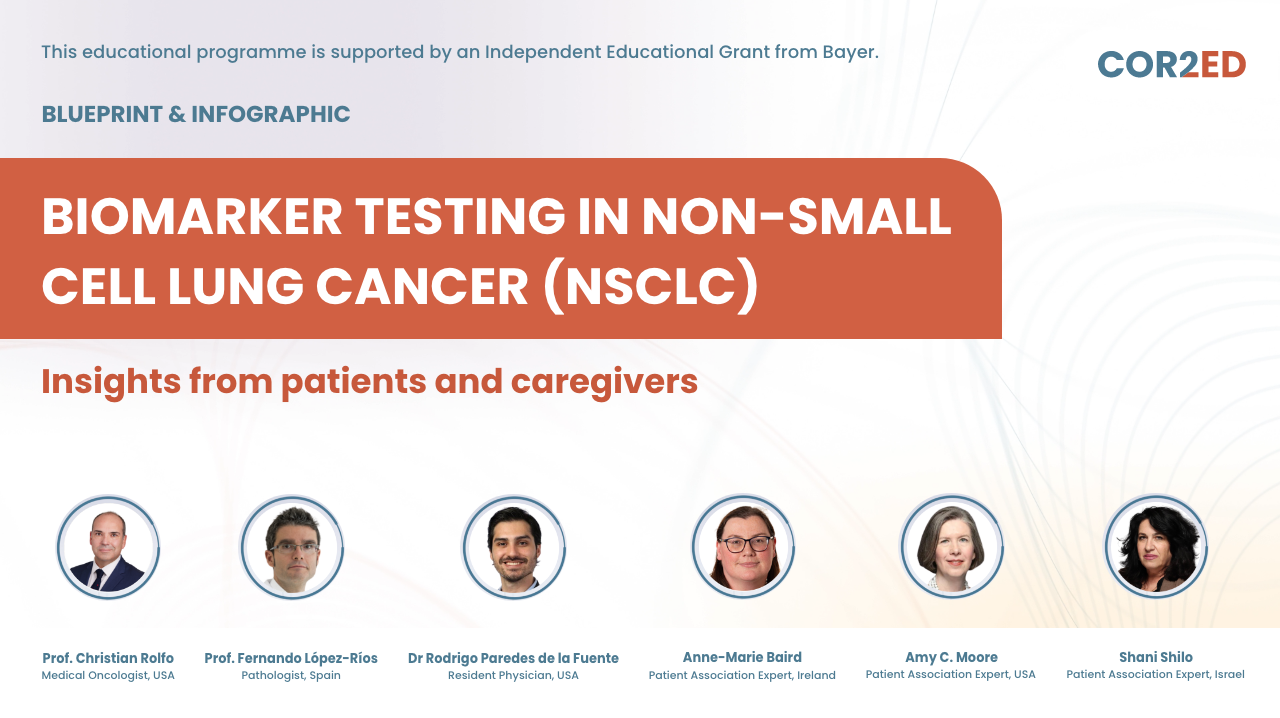
Biomarker testing in non-small cell lung cancer (NSCLC)

Insights from patients and caregivers

Experts
Prof. Christian Rolfo, Prof. Fernando López-Ríos, Dr Rodrigo Paredes de la Fuente, Anne-Marie Baird, Amy C. Moore, Shani Shilo
Endorsed by
LUNGevity The Israeli Lung Cancer Foundation
Biomarker Collaborative NTRKers Lung Cancer Europe
  • download Downloadable
    Resources
  • clock 5 MIN
  • calendar Jul 2026
  • Non-accredited Independent Medical Education

Educational programme supported by an Independent Educational Grant from Bayer.
micro-learning Micro learning - Video, slides and more
Oncology 
The evolving treatment landscape in HER2-mutant NSCLC

Expert insights on how the latest evidence is shaping clinical practice

Experts
Dr Devika Das, Dr Tom Newsom-Davis
Endorsed by
ICAN international cancer advocacy network Biomarker Collaborative Exon20group
  • download Downloadable
    Resources
  • clock 5 MIN
  • calendar Jul 2026
  • Non-accredited Independent Medical Education

Educational programme supported by an Independent Educational Grant from Bayer
animated-video Animated Video
Oncology 
The critical role of testing and management in NTRK-positive non-small cell lung cancer (NSCLC)

Using molecular testing to enable personalised care

Experts
Dr Herbert Loong
Endorsed by
ICAN international cancer advocacy network ISLB NTRKers
  • download Downloadable
    Resources
  • clock 5 MIN
  • calendar Jun 2026
  • Non-accredited Independent Medical Education

Educational programme supported by an Independent Educational Grant from Bayer.