
 Summary and next episodes
 Downloadable resources
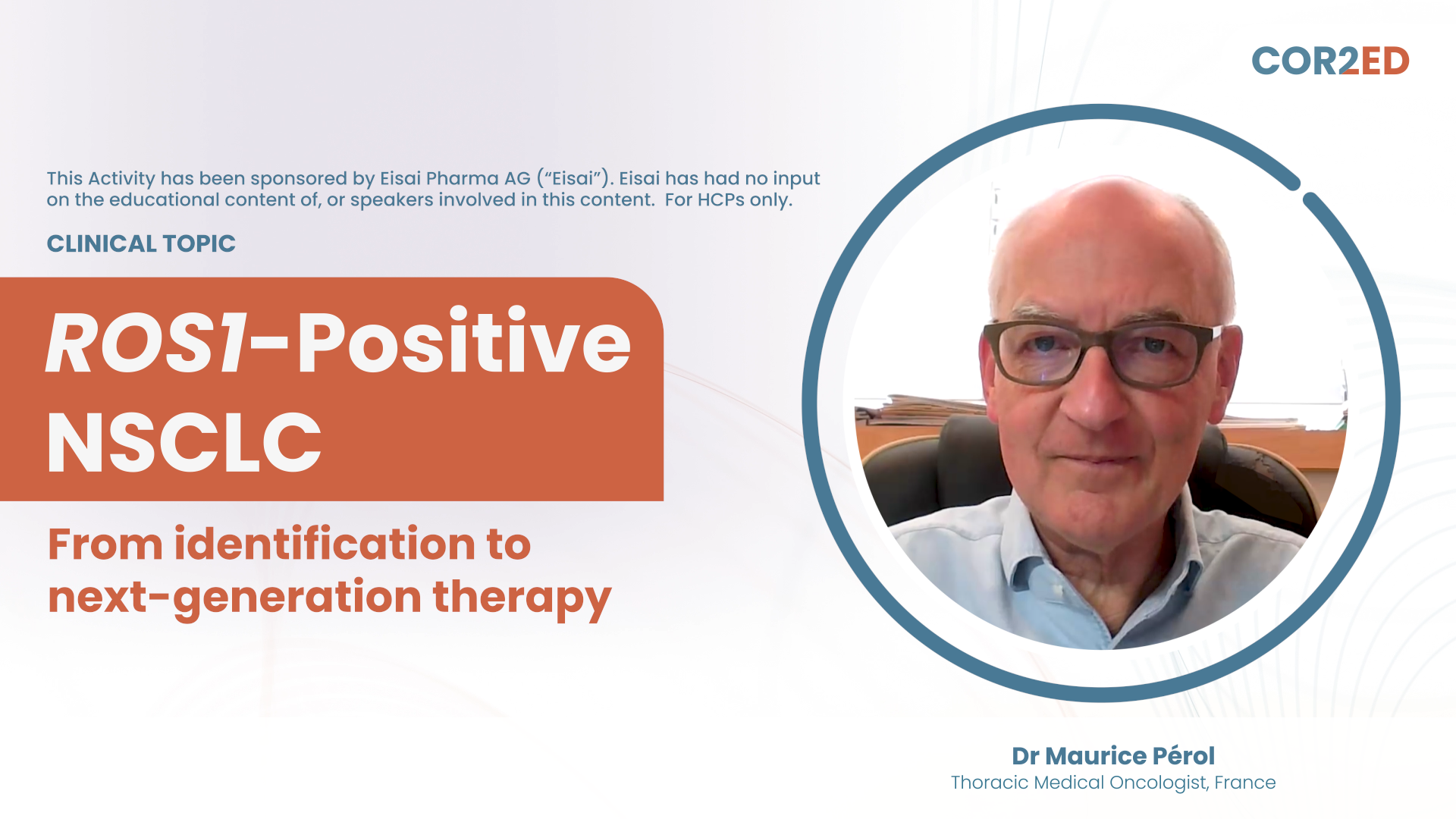
In this short video, medical oncologist Dr Herbert Loong discusses the testing and treatment journey in NTRK fusion-positive lung cancer. Watch the animated video to understand more about:
- Optimal molecular testing strategies for early identification of patients with NTRK fusion-positive lung cancer
- The evolving profiles of TRK inhibitor therapies for the treatment of this rare form of lung cancer
- Appropriate placement of therapies across the patient journey
Animated graphics bring the complex science to life, as Dr Loong explores the evolving landscape of TRK inhibitor therapy and considers future directions.
Watch the video, and view or download the accompanying slide set for more detailed insights.
Clinical takeaways
- Although rare (~0.1-0.3%), NTRK fusions represent an actionable driver in advanced NSCLC and should not be overlooked in comprehensive biomarker testing
- Upfront broad molecular profiling, ideally incorporating RNA-based next-generation sequencing (NGS), is critical to ensure detection of functional NTRK fusions and enable targeted therapy in the first-line setting
- TRK inhibitors, including larotrectinib, entrectinib, and repotrectinib, achieve high response rates and durable disease control, including intracranial activity, with toxicity profiles that are generally manageable in routine practice
- Disease progression can be mediated by on-target resistance mutations and off-target resistance pathways. Molecular reassessment at progression may guide subsequent therapy
 Download slides - PDF
 Duration
 Language(s)



 Downloadable
  27 MIN
 Oct 2026