* To replay the media content and watch again, please refresh your screen

In this interactive patient case, we will consider later-line treatment strategies for a patient with advanced metastatic colorectal cancer (CRC). You will meet a 61-year-old man whose colorectal cancer has progressed following treatment with chemotherapy and a monoclonal antibody. 


As you work through the case, you will be asked to make decisions on his treatment as he progresses through to 2nd- and 3rd-line and beyond. Supporting information is provided along the way to help your decision-making process. 


This interactive patient case will deepen your understanding of: 

  • Treatment options for advanced mCRC patients in later line 
  • The optimal sequence of these treatments to ensure patients benefit from all available treatments
  • Considerations for rechallenge or reintroduction of prior therapies


Clinical takeaways 

  • Treatment of advanced CRC should be considered as a continuum of care 
  • Patients should receive treatment with as many therapeutic options as are available 
  • Recommended treatments in the third-line setting include: regorafenib, TAS-102 + bevacizumab, anti-EGFR in RAS and BRAF wild-type patients not previously treated with EGFR antibodies 
  • It is important to use all available therapeutics and to sequence treatments based on patient characteristics and molecular characteristics
  • Liquid biopsy offers a novel, non-invasive testing method to determine the molecular profile and suitability for rechallenge 
  • Know how to optimise treatment for mCRC patients in later line 
  • Understand the potential treatment options for these patients 
  • Understand the available data to support the optimal sequencing of these treatments
  • Know when to employ rechallenge versus switching strategies to achieve optimal outcomes 

Andrea Sartore-Bianchi is the Director of the Division of Clinical Research and Innovation at Grande Ospedale Metropolitano Niguarda in Milano, Italy, and Associate Professor of Oncology at the University of Milano. He received his MD and postgraduate degree in Oncology at the University of Pavia, Italy, and subsequently conducted preclinical research at Brown University, Providence, RI, USA.


His main clinical and research interests include precision oncology and the treatment of gastrointestinal cancers, particularly colorectal carcinomas, focusing on biomarkers of sensitivity/resistance to targeted therapies. He is principal and co-investigator in Phase I-III clinical trials for solid tumours and carried out initial studies paving the way for the use of RAS and Her2 as tumor tissue/ctDNA biomarkers in colorectal cancer. He has published 200 peer-reviewed articles in various medical journals with a H-index of 62 (Scopus).

Prof. Andrea Sartore-Bianchi has received financial support/sponsorship for research support, consultation, or speaker fees from the following companies:

Amgen, Bayer, Sanofi and Servier Pharmaceuticals. 

Programme summary
  • clock Duration 15 MIN
  • clock Language(s) flag
Share this programme
This educational programme is supported by an Independent Educational Grant from Bayer.
Supporter Acknowledgement
This educational programme is supported by an Independent Educational Grant from Bayer.
Endorsement
I agree that this educational programme:

Was valuable to me

1/4
Brought to you by
GI CONNECT

GI CONNECT is an initiative of COR2ED, supported by Independent Educational Grants from Bayer, Ipsen, BeiGene Europe, Pierre Fabre Laboratories, Amgen and AstraZeneca US.  

Meet the experts
Brought to you by
GI NURSES CONNECT

GI NURSES CONNECT is an initiative of COR2ED, supported by Independent Educational Grants from Bayer and Eisai Europe Limited.

Meet the experts Independent IME approved

Other programmes of interest

conference-update Conference update

Episode

3

of 3

episode
Oncology 
How are new data shaping the landscape in HER2-mutant NSCLC?

Insights from WCLC 2026

Experts
Dr Joshua Sabari
Endorsed by
ICAN international cancer advocacy network Biomarker Collaborative Exon20group
  • clock 5 MIN
  • calendar Sep 2026

Educational programme supported by an Independent Educational Grant from Bayer.
blueprint BluePrintInfographic / Flashcard
Oncology 
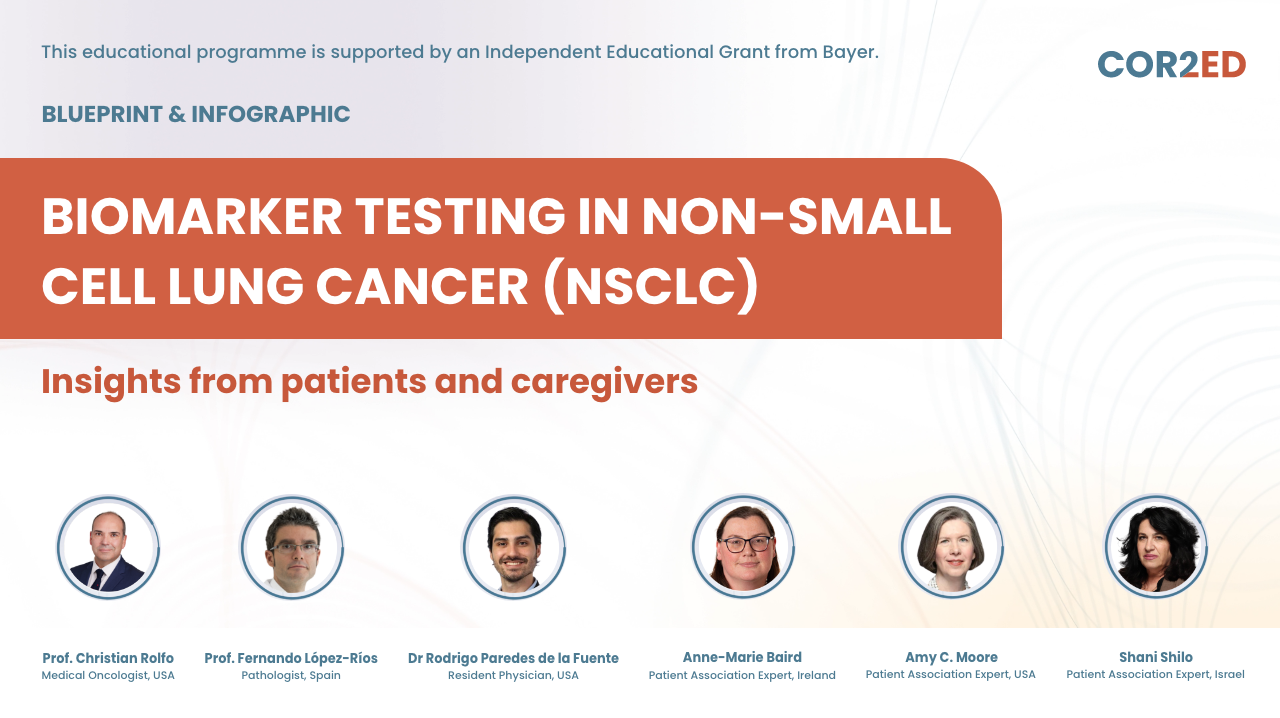
Biomarker testing in non-small cell lung cancer (NSCLC)

Insights from patients and caregivers

Experts
Prof. Christian Rolfo, Prof. Fernando López-Ríos, Dr Rodrigo Paredes de la Fuente, Anne-Marie Baird, Amy C. Moore, Shani Shilo
Endorsed by
LUNGevity The Israeli Lung Cancer Foundation
Biomarker Collaborative NTRKers Lung Cancer Europe
  • download Downloadable
    Resources
  • clock 5 MIN
  • calendar Jul 2026
  • Non-accredited Independent Medical Education

Educational programme supported by an Independent Educational Grant from Bayer.
conference-update Conference update
Oncology Hemato-oncology 
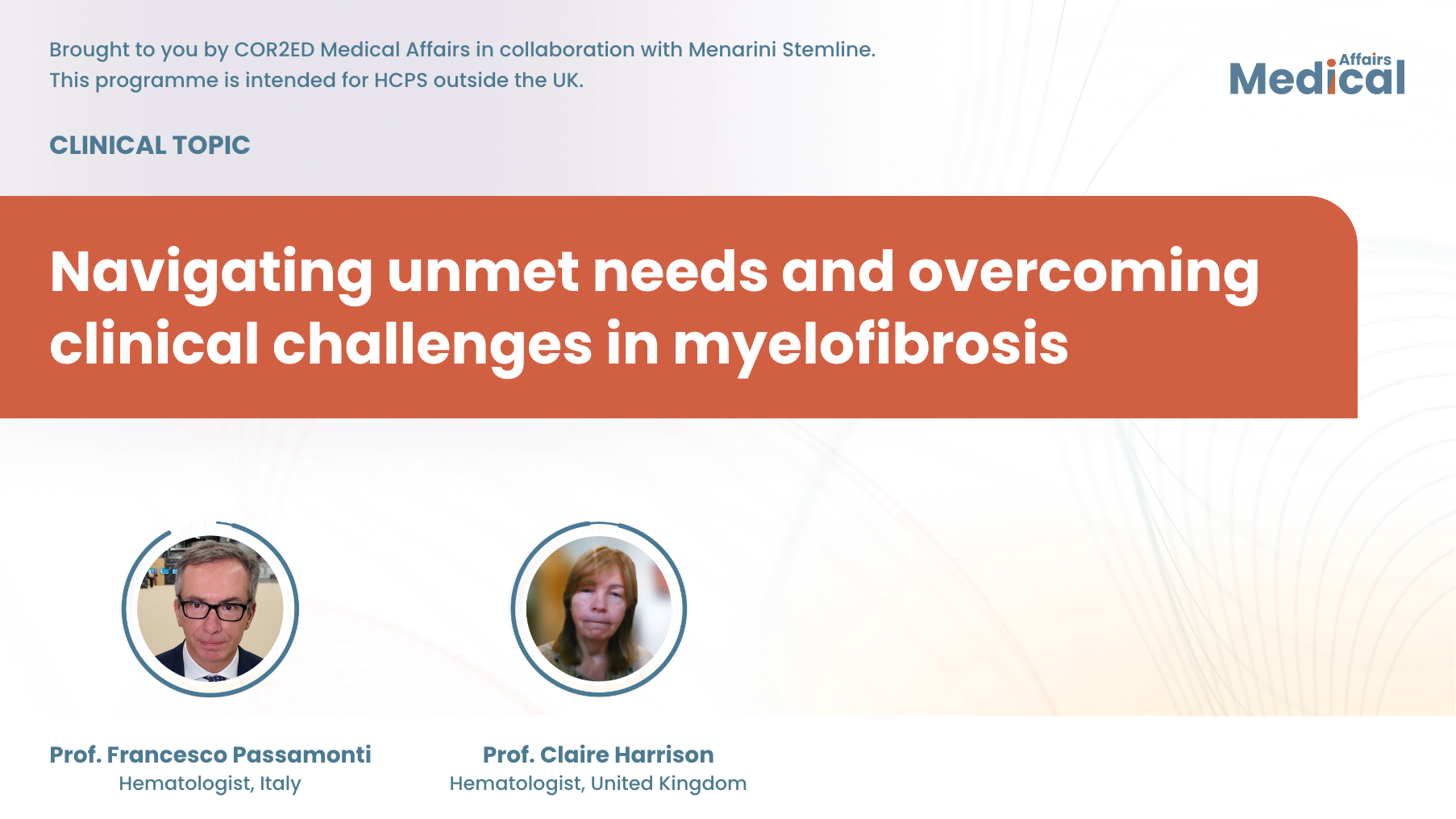
Myelofibrosis: Navigating unmet needs and overcoming clinical challenges

Expert perspectives on clinical trial highlights from EHA 2026

Experts
Prof. Francesco Passamonti, Prof. Claire Harrison
  • download Downloadable
    Resources
  • clock 6 MIN
  • calendar Jul 2026

Brought to you by COR2ED Medical Affairs in collaboration with Menarini Stemline. This programme is intended for HCPS outside the UK. MED---2600258
micro-learning Micro learning - Video, slides and more
Oncology 
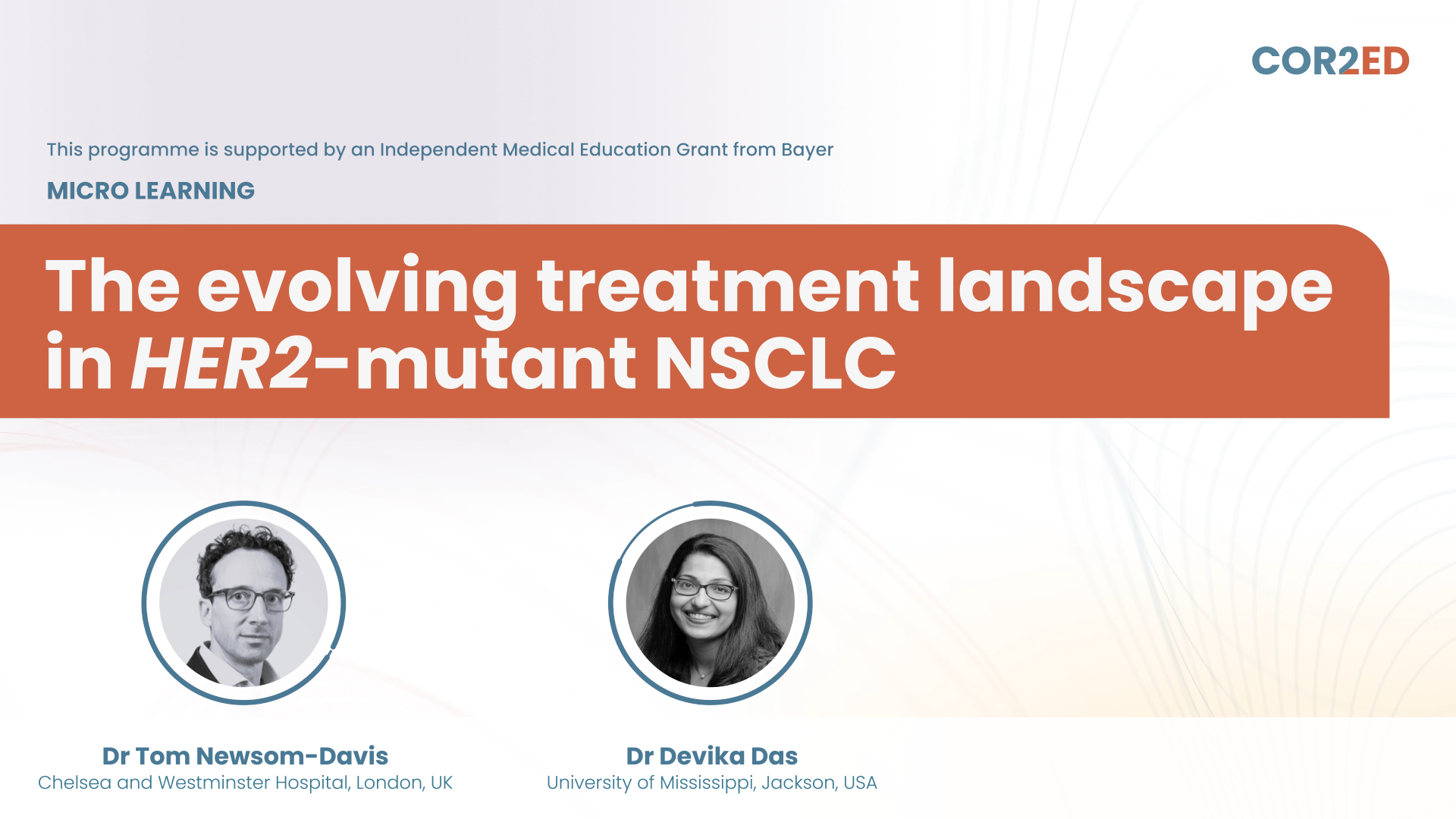
The evolving treatment landscape in HER2-mutant NSCLC

Expert insights on how the latest evidence is shaping clinical practice

Experts
Dr Devika Das, Dr Tom Newsom-Davis
Endorsed by
ICAN international cancer advocacy network Biomarker Collaborative Exon20group
  • download Downloadable
    Resources
  • clock 5 MIN
  • calendar Jul 2026
  • Non-accredited Independent Medical Education

Educational programme supported by an Independent Educational Grant from Bayer