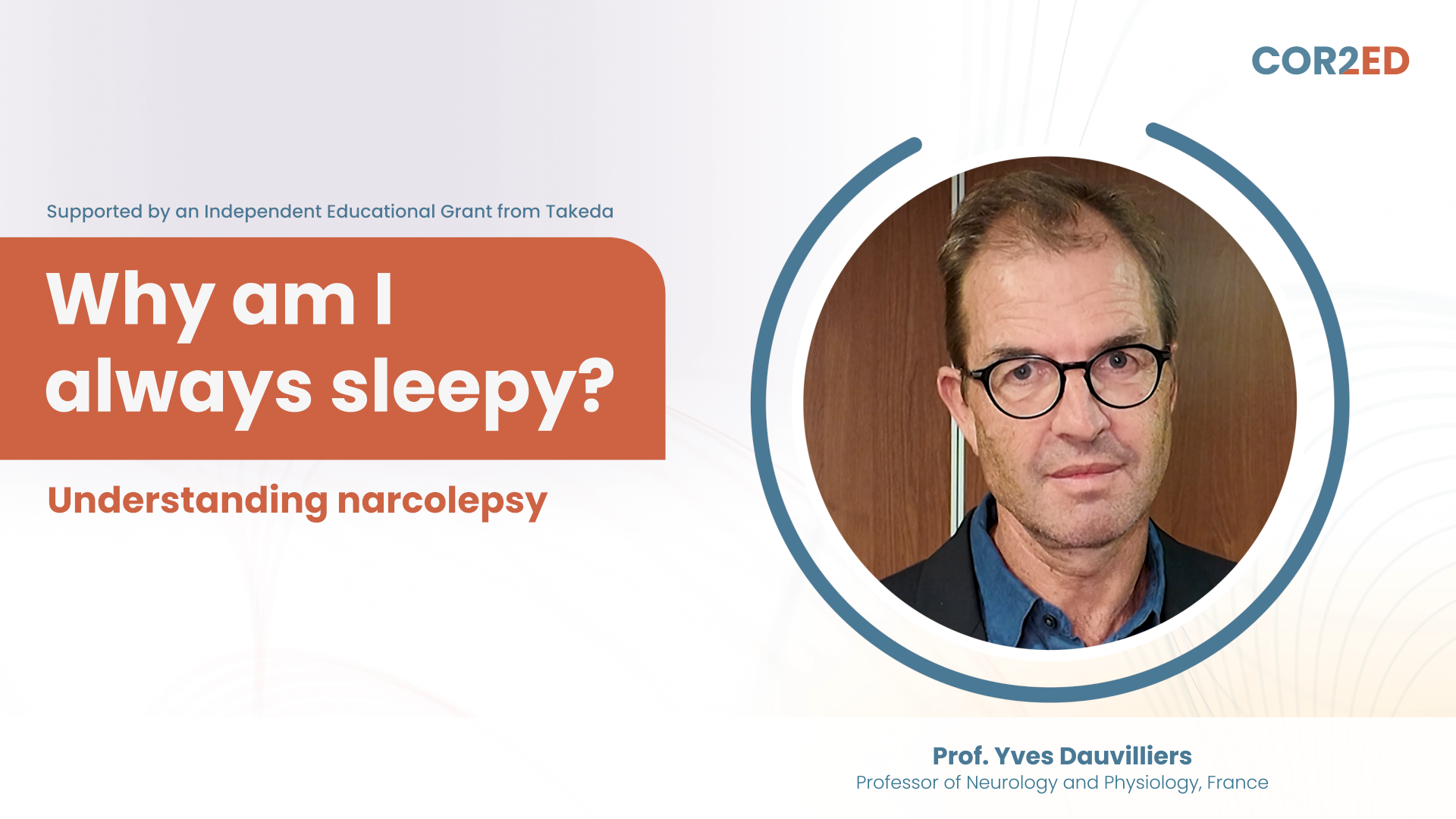
Narcolepsy is a chronic physical condition that affects the brain's ability to regulate sleep and wakefulness. Often first appearing during the teenage years, it can significantly disrupt daily life, yet it frequently remains misunderstood or undiagnosed for years. 


Key symptoms to be aware of include: 

  • Excessive daytime sleepiness: An overwhelming urge to sleep that can lead to falling asleep at unexpected times or places
  • Cataplexy: A sudden loss of muscle control, often triggered by strong emotions such as laughter or surprise 
  • Sleep disturbances: Vivid nightmares, hallucinations, or sleep paralysis (a temporary inability to move) when waking or falling asleep 


If you or someone you know experiences these symptoms, it is important to consult a GP, who can provide a referral to a specialist sleep centre for a formal assessment and support. 


Clinical takeaways

  • Feeling overwhelmingly sleepy during the day shouldn't be ignored. If you find yourself falling asleep at unexpected times and places, even at school, at work, or while standing, it could be narcolepsy  
  • Narcolepsy is more than just feeling sleepy. Warning signs include sudden muscle weakness (cataplexy) triggered by strong emotions, being unable to move when falling asleep or waking up (sleep paralysis), vivid dream-like experiences (hallucinations), and fragmented night-time sleep 
  • The right diagnosis can make a difference. If these symptoms sound familiar, speak to your GP, who can refer you to a specialist sleep centre for further assessment and appropriate treatment 


This video and infographic are available in 13 languages. Links to the videos are below, and all infographics are available to download under the Downloadable resources tab.

 

  Spanish: https://youtu.be/VOqdgR3UYeQ

  French: https://youtu.be/R5q6F18gKI0

  German: https://youtu.be/l8EnHc4v1u4

  Dutch: https://youtu.be/4ugn_oO37uw

  Polish: https://youtu.be/Ky-cvbnC6MI

  Bulgarian: https://youtu.be/7eA3cIv0tVM

  Danish: https://youtu.be/26b82HG8i14

  Norwegian: https://youtu.be/1XE7zW-rbx4

  Greek: https://youtu.be/x5ddtXkPdKA

  Finnish: https://youtu.be/oJqBrsJAUWs

  Swedish: https://youtu.be/vH8UdM4gvAM


  • Recognise the signs and symptoms of narcolepsy 
    • Help people understand the key features that distinguish narcolepsy from other conditions, such as excessive daytime sleepiness, sudden muscle weakness (cataplexy), hallucinations, and sleep paralysis  
  • Identify when persistent sleep-related symptoms may warrant a discussion with a GP or healthcare professional 
    • Understand that appropriate testing and early consultation with a healthcare professional can help prevent years of misdiagnosis and improve quality of life 
  • Recognise that narcolepsy is a manageable condition and that many people living with narcolepsy can improve their daily lives with appropriate care 

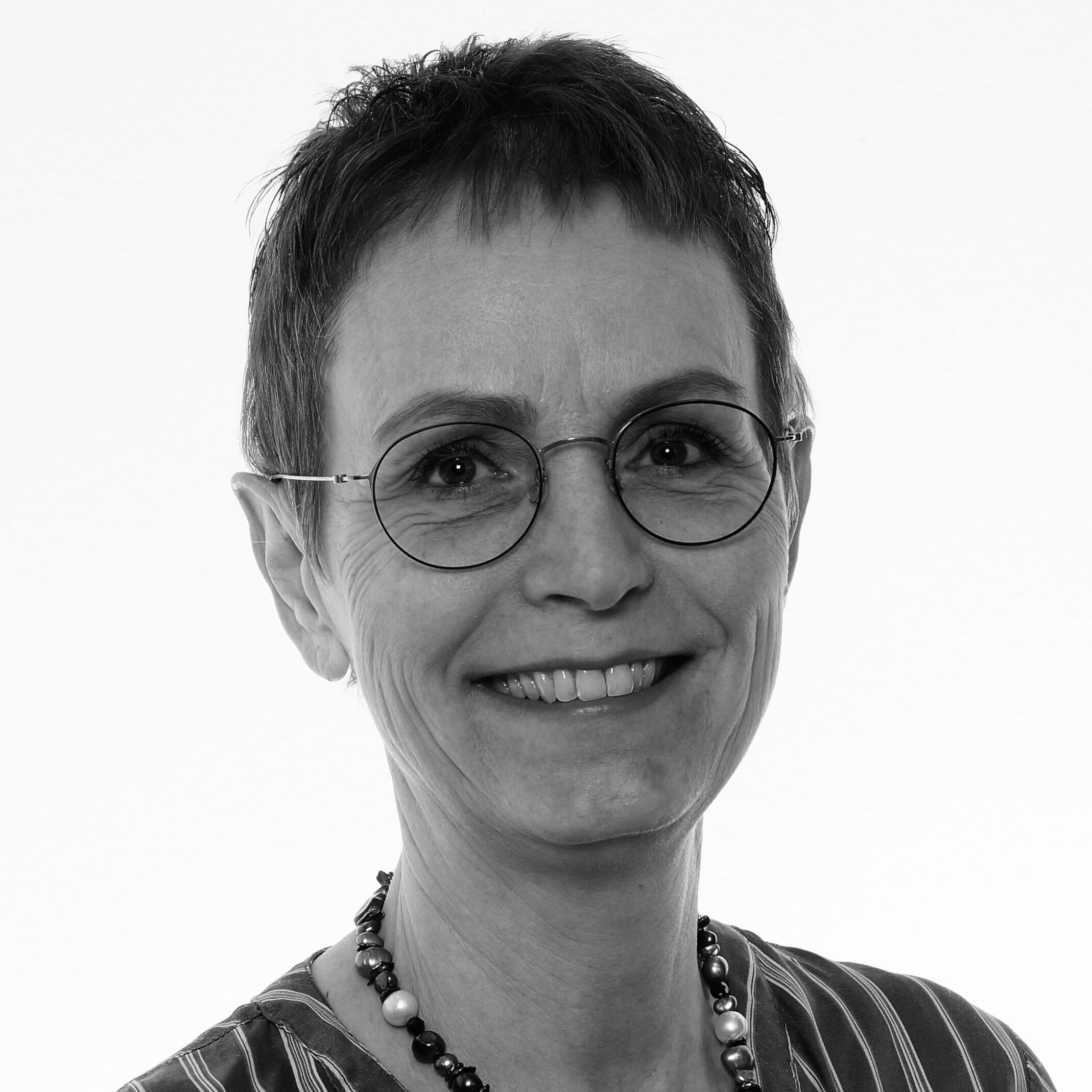
Connie has been living with narcolepsy for more than 40 years. Over the past 20 years she has been actively engaged in patient advocacy, initially through the Danish Narcolepsy Association (DNF), where she served as Treasurer and Chair of the board for a total of 19 years, and in recent years also at a European level.


In 2022, the European Narcolepsy Alliance for Patients (eNAP) was officially established as an umbrella organisation for national patient organisations across Europe. Connie has served as Treasurer of eNAP for the past four years, working to strengthen the voice of people living with narcolepsy and hypersomnia and to promote collaboration among patient organisations across Europe.

Leontien has been living with a diagnosis of narcolepsy for more than 30 years. Throughout this time, she has been actively involved in patient advocacy, initially through the Dutch Narcolepsy Association (NVN) and later at a European level.


In 2022, the European Narcolepsy Alliance for Patients (eNAP) was officially established as an umbrella organisation for national patient organisations across Europe. Leontien has served as Chair of eNAP for the past three years, working to strengthen the voice of people living with narcolepsy and hypersomnia and to promote collaboration among patient organisations across Europe

Narcolepsy is a chronic physical condition that affects the brain's ability to regulate sleep and wakefulness. Often first appearing during the teenage years, it can significantly disrupt daily life, yet it frequently remains misunderstood or undiagnosed for years. 


Key symptoms to be aware of include: 

  • Excessive daytime sleepiness: An overwhelming urge to sleep that can lead to falling asleep at unexpected times or places
  • Cataplexy: A sudden loss of muscle control, often triggered by strong emotions such as laughter or surprise 
  • Sleep disturbances: Vivid nightmares, hallucinations, or sleep paralysis (a temporary inability to move) when waking or falling asleep 


If you or someone you know experiences these symptoms, it is important to consult a GP, who can provide a referral to a specialist sleep centre for a formal assessment and support. 


Clinical takeaways

  • Feeling overwhelmingly sleepy during the day shouldn't be ignored. If you find yourself falling asleep at unexpected times and places, even at school, at work, or while standing, it could be narcolepsy  
  • Narcolepsy is more than just feeling sleepy. Warning signs include sudden muscle weakness (cataplexy) triggered by strong emotions, being unable to move when falling asleep or waking up (sleep paralysis), vivid dream-like experiences (hallucinations), and fragmented night-time sleep 
  • The right diagnosis can make a difference. If these symptoms sound familiar, speak to your GP, who can refer you to a specialist sleep centre for further assessment and appropriate treatment 


This video and infographic are available in 13 languages. Links to the videos are below, and all infographics are available to download under the Downloadable resources tab.


  Spanish: https://youtu.be/VOqdgR3UYeQ

  French: https://youtu.be/R5q6F18gKI0

  German: https://youtu.be/l8EnHc4v1u4

  Dutch: https://youtu.be/4ugn_oO37uw

  Polish: https://youtu.be/Ky-cvbnC6MI

  Bulgarian: https://youtu.be/7eA3cIv0tVM

  Danish: https://youtu.be/26b82HG8i14

  Norwegian: https://youtu.be/1XE7zW-rbx4

  Greek: https://youtu.be/x5ddtXkPdKA

  Finnish: https://youtu.be/oJqBrsJAUWs

  Swedish: https://youtu.be/vH8UdM4gvAM


  • Recognise the signs and symptoms of narcolepsy 
    • Help people understand the key features that distinguish narcolepsy from other conditions, such as excessive daytime sleepiness, sudden muscle weakness (cataplexy), hallucinations, and sleep paralysis 
  • Identify when persistent sleep-related symptoms may warrant a discussion with a GP or healthcare professional 
    • Understand that appropriate testing and early consultation with a healthcare professional can help prevent years of misdiagnosis and improve quality of life 
  • Recognise that narcolepsy is a manageable condition and that many people living with narcolepsy can improve their daily lives with appropriate care 

Connie has been living with narcolepsy for more than 40 years. Over the past 20 years she has been actively engaged in patient advocacy, initially through the Danish Narcolepsy Association (DNF), where she served as Treasurer and Chair of the board for a total of 19 years, and in recent years also at a European level.


In 2022, the European Narcolepsy Alliance for Patients (eNAP) was officially established as an umbrella organisation for national patient organisations across Europe. Connie has served as Treasurer of eNAP for the past four years, working to strengthen the voice of people living with narcolepsy and hypersomnia and to promote collaboration among patient organisations across Europe.

Leontien has been living with a diagnosis of narcolepsy for more than 30 years. Throughout this time, she has been actively involved in patient advocacy, initially through the Dutch Narcolepsy Association (NVN) and later at a European level.


In 2022, the European Narcolepsy Alliance for Patients (eNAP) was officially established as an umbrella organisation for national patient organisations across Europe. Leontien has served as Chair of eNAP for the past three years, working to strengthen the voice of people living with narcolepsy and hypersomnia and to promote collaboration among patient organisations across Europe

Supporter Acknowledgement
This video has been originally developed with sponsorship from UCB in 2016. The current updated version has been developed with the support of an Independent Educational Grant from Takeda.
Endorsement
I agree that this educational programme:

Was valuable to me

1/4
Brought to you by
SLEEP CONNECT

SLEEP CONNECT is an initiative of COR2ED, supported by an Independent Educational Grant from Takeda.

Meet the experts Independent IME approved
Supporter Acknowledgement
This video has been originally developed with sponsorship from UCB in 2016. The current updated version has been developed with the support of an Independent Educational Grant from Takeda.
Endorsement
I agree that this educational programme:

Was valuable to me

1/4
Brought to you by
SLEEP CONNECT

SLEEP CONNECT is an initiative of COR2ED, supported by an Independent Educational Grant from Takeda.

Meet the experts Independent IME approved

Other programmes of interest

podcast Video podcast
Rare diseases 
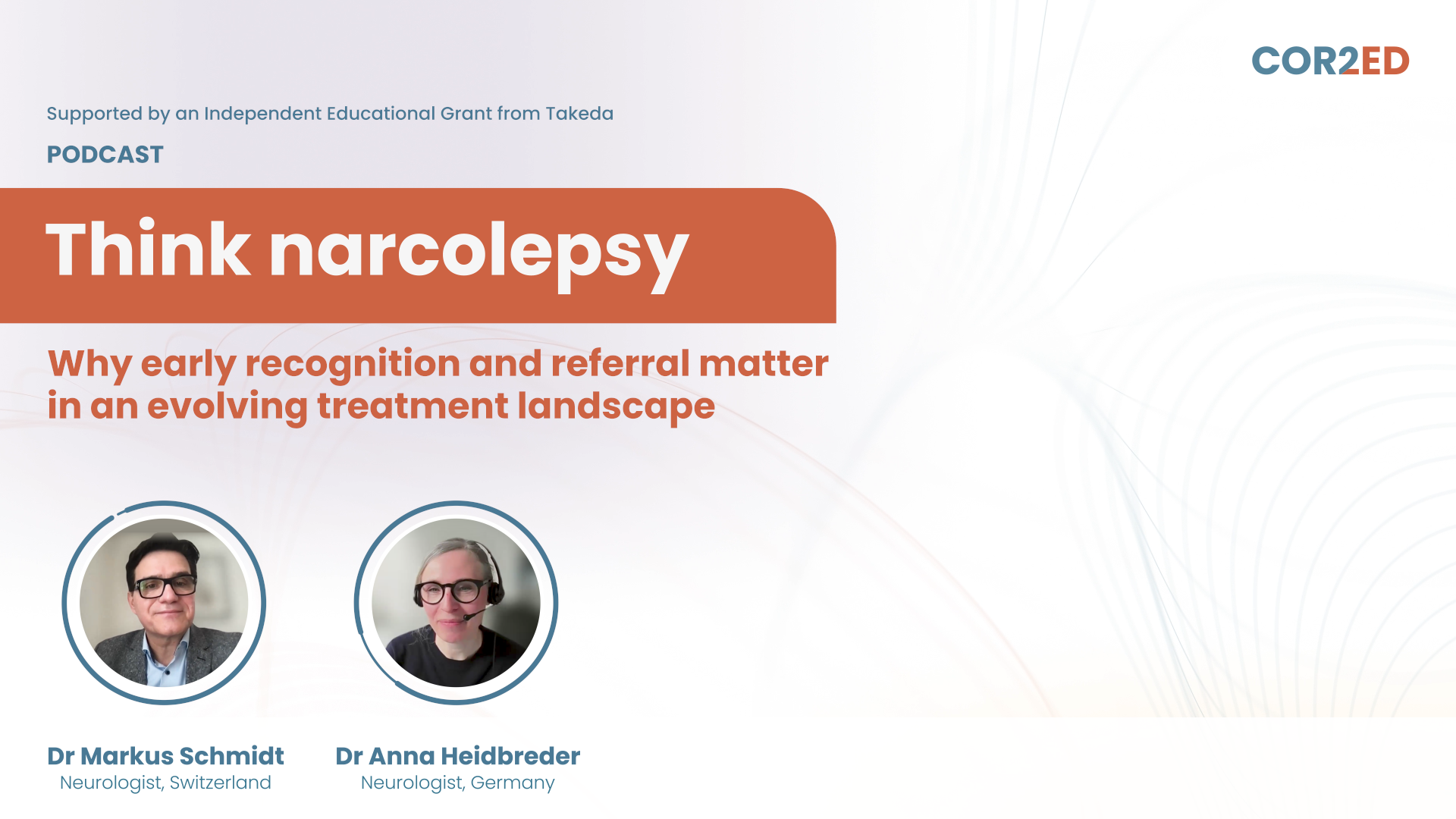
Think narcolepsy: Why early recognition and referral matter in an evolving treatment landscape

Optimising diagnostic pathways

Experts
Dr Markus Schmidt, Dr Anna Heidbreder
  • download Downloadable
    Resources
  • clock 17 MIN
  • calendar Jun 2026
  • Non-accredited Independent Medical Education

Educational programme supported by an Independent Educational Grant from Takeda.
Infographic / Flashcard
Oncology Rare diseases 
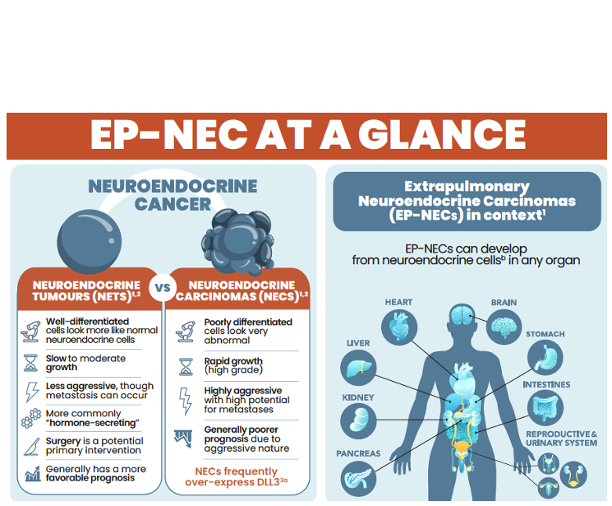
EP-NEC at a glance

Understanding EP-NEC, emerging treatments, and patient care strategies

Experts
Meredith Cummins
  • download Downloadable
    Resources
  • clock 1 MIN
  • calendar May 2026

This programme has been sponsored by Boehringer Ingelheim
expert-video-animation Animated Video
Rare diseases 
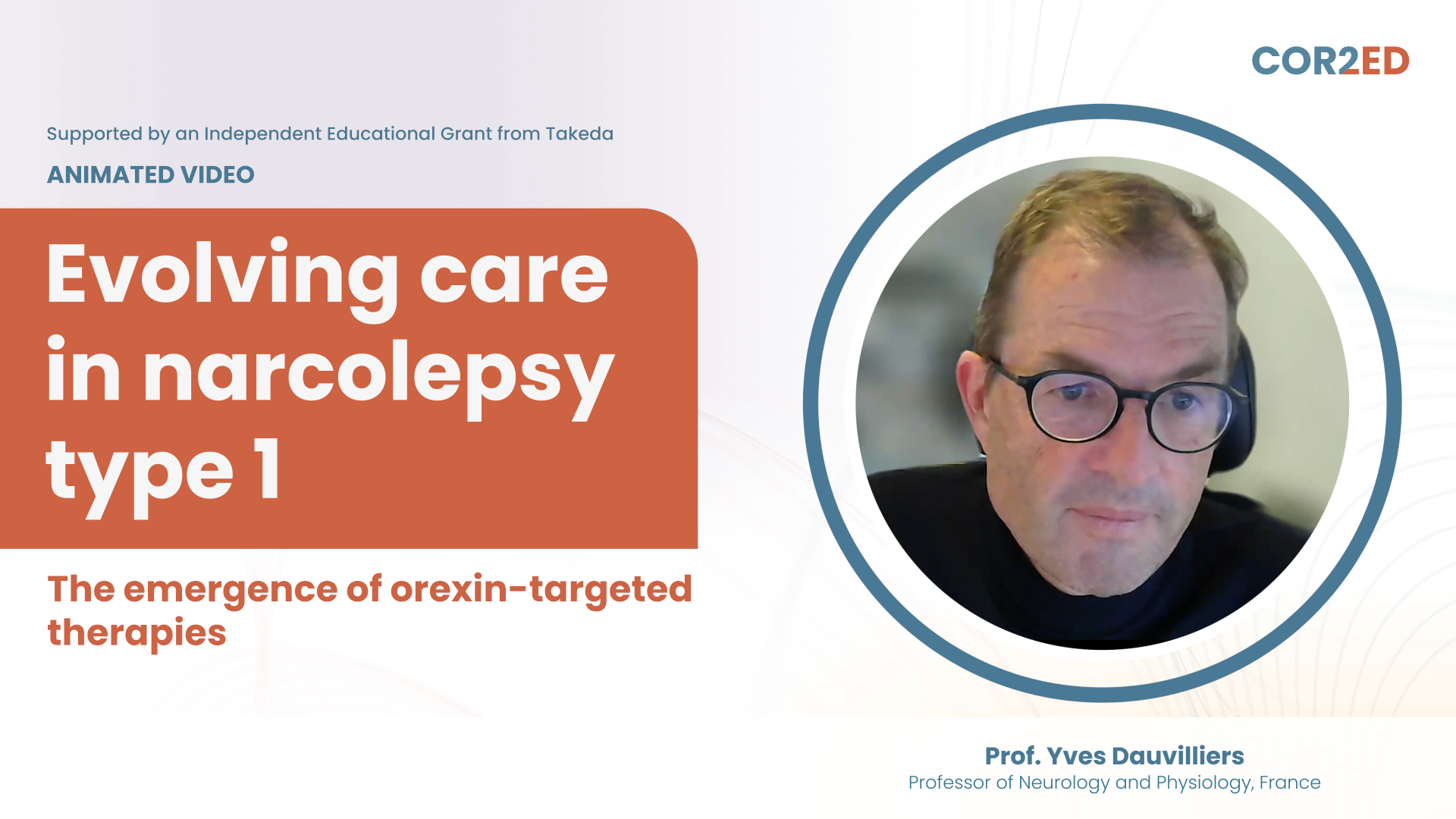
Evolving care in narcolepsy type 1

The emergence of orexin-targeted therapies

Experts
Prof. Yves Dauvilliers
Endorsed by
ANC Reference centre
  • download Downloadable
    Resources
  • clock 6 MIN
  • calendar Apr 2026
  • Non-accredited Independent Medical Education

Educational programme supported by an Independent Educational Grant from Takeda
conference-update Conference update

Episode

2

of 2

episode
Oncology Rare diseases Endocrinology 
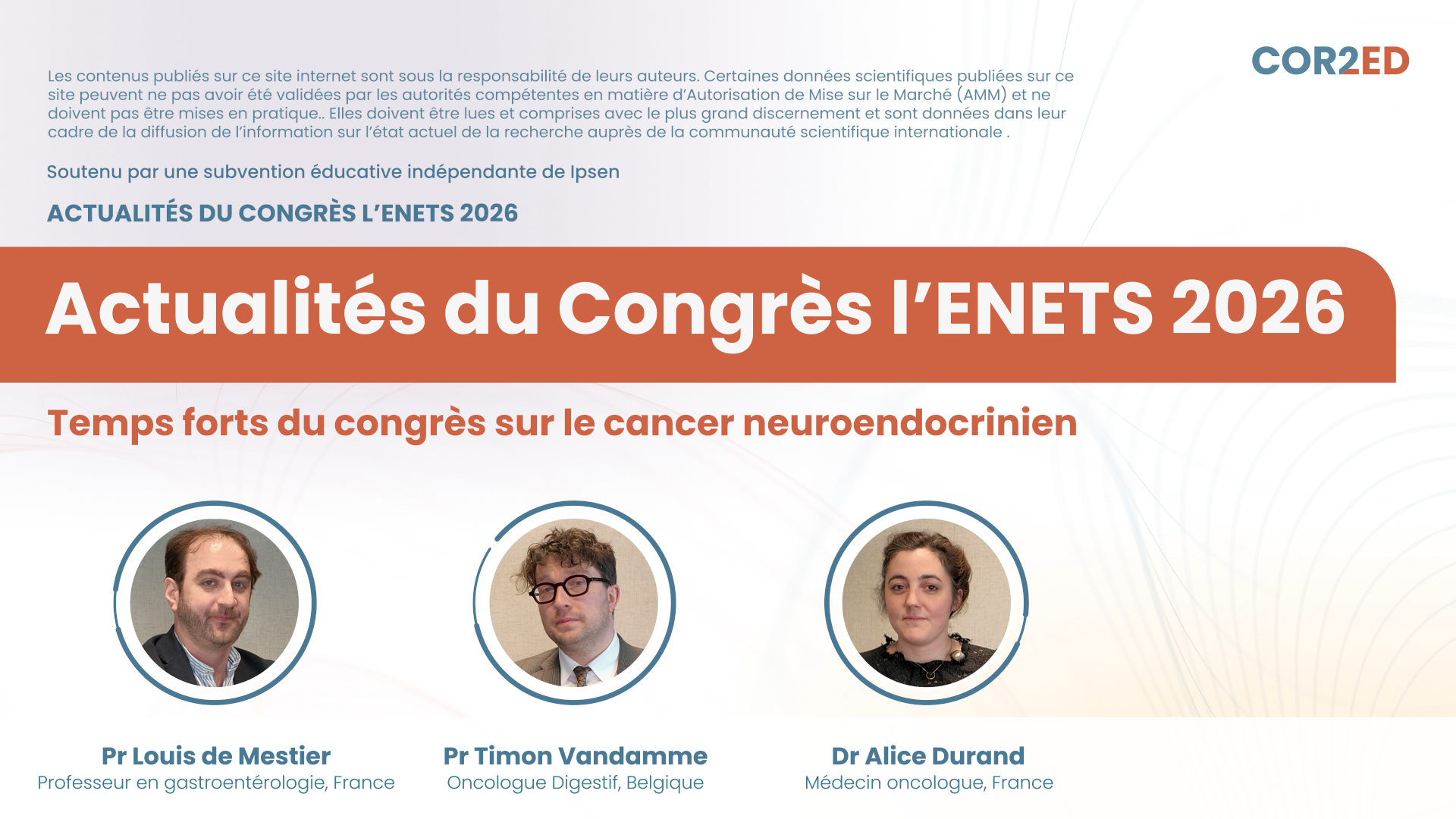
Actualités du Congrès l’ENETS 2026

Points de vue d’experts sur les dernières données concernant le cancer neuroendocrinien

Experts
Prof. Louis de Mestier, Prof. Timon Vandamme, Dr Alice Durand
  • clock 5 MIN
  • calendar Mar 2026
  • Non-accredited Independent Medical Education

Cette vidéo est soutenue par une subvention indépendante à visée éducative d’Ipsen.  Les contenus publiés sur ce site internet sont sous la responsabilité de leurs auteurs. Certaines données scientifiques publiées sur ce site sont susceptibles de ne pas être validées par la commission d’Autorisation de Mise sur le Marché, et ne doivent pas être mises en pratique. Elles doivent être lues et comprises avec le plus grand discernement et sont données dans leur cadre de la diffusion de l’information sur l’état actuel de la recherche auprès de la communauté scientifique internationale  
conference-update Conference update

Episode

1

of 2

episode
Oncology Rare diseases Endocrinology 
Update from ENETS 2026

Experts share their views on latest data in neuroendocrine cancer

Experts
Prof. Louis de Mestier, Prof. Timon Vandamme, Dr Alice Durand
  • clock 5 MIN
  • calendar Mar 2026
  • Non-accredited Independent Medical Education

This educational programme is supported by an Independent Educational Grant from Ipsen. The content published on this website is under the responsibility of its authors. Some scientific data published on this website may not have been validated by the relevant Marketing Authorisation Committees and should not be put into practice. It should be read and understood with the utmost discernment and is provided for the purpose of disseminating information on the current state of research to the international scientific community.
patient-support Patient Support
Rare diseases 
Understanding narcolepsy

Persistent sleepiness: when to look closer

Experts
Prof. Yves Dauvilliers
Endorsed by
EU-NN ANC
eNAP
  • clock 2 MIN
  • calendar Jan 2026
  • Non-accredited Independent Medical Education

Educational programme supported by an Independent Educational Grant from Takeda